Zanabazar: Mongolia's Great Buddhist Leader and Sculptor
Zanabazar (1635–1723), first Jebtsundamba Khutuktu: his life, Soyombo script, monasteries, gilt bronze Taras and where to see his work in Mongolia.
4 min read · Updated
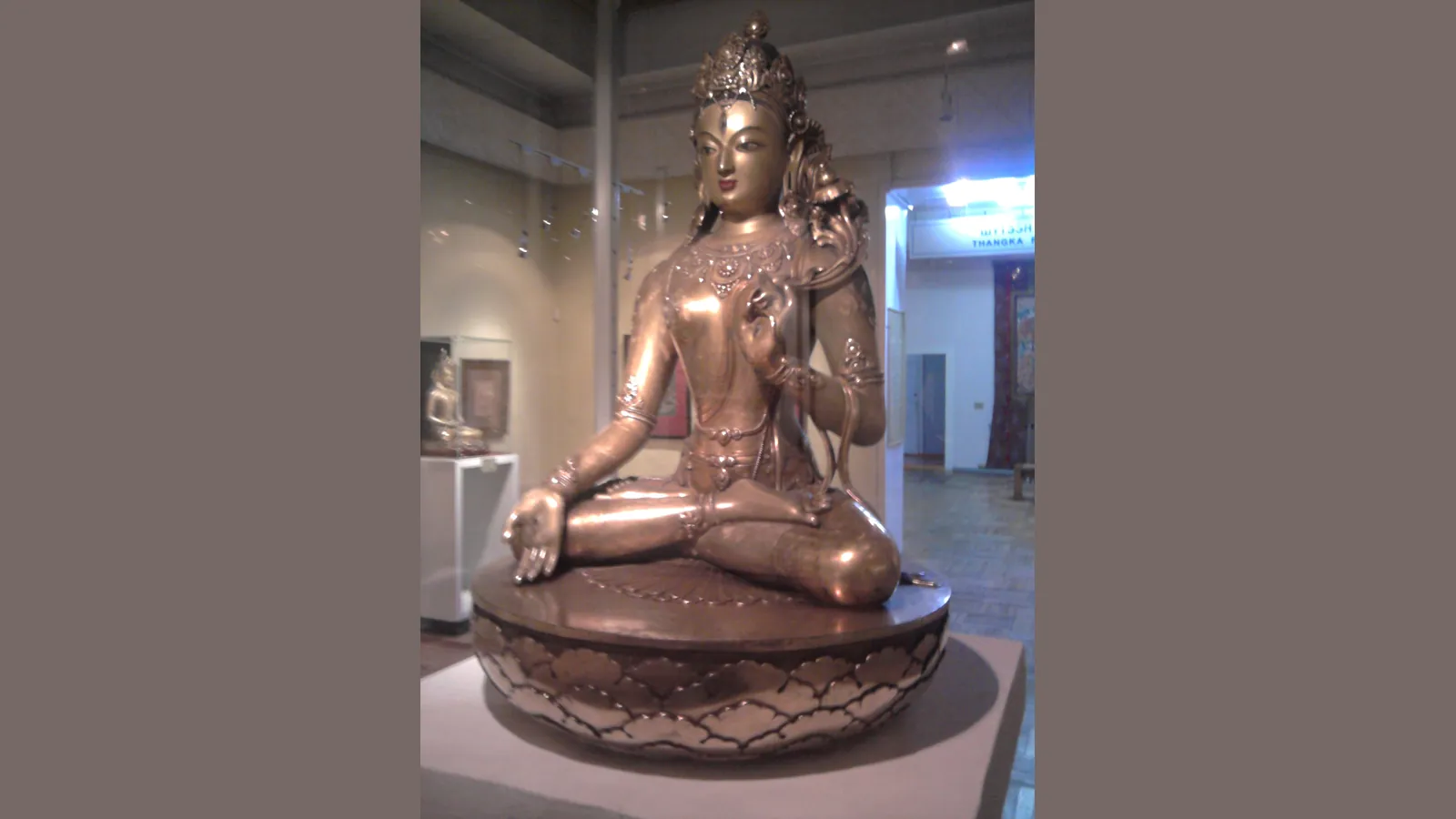
Photo: Lady Anu · CC BY-SA 3.0 · Wikimedia Commons
Öndör Gegeen Zanabazar (1635–1723) was the first Jebtsundamba Khutuktu, the spiritual head of Tibetan Buddhism among the Khalkha Mongols, and one of the finest Buddhist sculptors of his age. He founded monasteries, designed the Soyombo script and led the Khalkha through the crisis that ended with their submission to the Qing dynasty in 1691. His gilt bronze Taras and Buddhas are treasures of Ulaanbaatar's museums.
Zanabazar's early life and titles
Zanabazar was born in 1635 in what is now Övörkhangai province, a son of Gombodorj, the Tüsheet Khan, a Khalkha prince descended from Chinggis Khaan. His name is the Mongolian form of the Sanskrit Jñānavajra, roughly "vajra of wisdom". In 1639, aged about four, he was proclaimed the religious leader of the Khalkha and given the title Öndör Gegeen (Өндөр гэгээн), "High Saint".
Around 1650 he travelled to Tibet, where the Fifth Dalai Lama recognised him as the reincarnation of the Tibetan scholar Taranatha. Zanabazar is counted as the first Jebtsundamba Khutuktu (Javzandamba khutagt, Жавзандамба хутагт), a line of reincarnations whose eighth holder became the Bogd Khan, ruler of Mongolia from 1911 to 1924. In Tibet he also gained the training in bronze casting and gilding that shaped his art.
Monasteries linked to Zanabazar
- Shankh Monastery, near Kharkhorin, traces its founding to 1647, when Zanabazar was still a boy. It began as a mobile ger monastery known as Baruun Khüree, the "Western Monastery", and settled on its present site much later.
- Tövkhön Monastery, a hilltop retreat on Shireet Ulaan mountain southwest of Kharkhorin, was founded by Zanabazar in the mid-17th century (sources give 1648 or 1653). He used it as a workshop and retreat for about 30 years, and tradition holds that he created the Soyombo script there. It is part of the Orkhon Valley Cultural Landscape World Heritage Site.
- Amarbayasgalant Monastery in Selenge province was not founded by Zanabazar but built in his honour. The Yongzheng Emperor ordered its construction, which ran from 1727 to 1736, and Zanabazar's remains were later enshrined there.
Like most Mongolian monasteries, these sites suffered in the anti-religious purges of the late 1930s: Shankh was closed in 1937 and most of its buildings destroyed, Tövkhön was badly damaged, and Amarbayasgalant only partly survived. Religious life returned after 1990.
The Soyombo script and the Dolon Nor assembly of 1691
In 1686 Zanabazar designed the Soyombo script, which could write Mongolian, Tibetan and Sanskrit and was used mainly for Buddhist texts. Its opening sign, the Soyombo symbol, is now Mongolia's national symbol.
In 1688 the Dzungar (Oirat) ruler Galdan invaded Khalkha, and his troops destroyed monasteries including Erdene Zuu. Zanabazar fled south with a large number of Khalkha refugees into what is now Inner Mongolia. In 1691, at an assembly at Dolon Nor, the Khalkha rulers, with Zanabazar's backing, formally accepted the Kangxi Emperor as their overlord in return for protection. Qing armies defeated Galdan in 1697. The decision is still debated in Mongolia: it saved Khalkha from the Dzungars but placed it under Qing rule until 1911.
He returned to Khalkha around 1701 to oversee the restoration of Erdene Zuu and died in Beijing in 1723.
Zanabazar's sculpture: Taras and Buddhas
Zanabazar worked mainly in gilt bronze, creating figures with calm faces, slender proportions and finely detailed jewellery. The works most often attributed to him include:
- White Tara (Sitatara), made around the 1680s
- Green Tara and a series of the Twenty-One Taras
- the Five Dhyani Buddhas, a set cast in 1683
- a Vajradhara dated to 1683 and several figures of Maitreya
He also trained pupils, so many pieces are labelled "school of Zanabazar" rather than his own work, and attributions can differ between catalogues.
Where to see Zanabazar's work in Ulaanbaatar
- Zanabazar Museum of Fine Arts: the White Tara and Buddhas attributed to him, in a 1905 building in central Ulaanbaatar.
- Bogd Khan Palace Museum: the Green Tara and a set of Taras associated with Zanabazar and his school.
- Choijin Lama Temple Museum: several gilt bronzes attributed to Zanabazar, including a portrait statue of him.
- Gandan Monastery: the Vajradhara Temple holds the 1683 Vajradhara credited to him.
Outside the capital, combine Amarbayasgalant with a trip north, or Shankh and Tövkhön with a visit to Kharkhorin. Displays, opening hours and photography rules change, so check locally before you go, and dress modestly in active temples.
Places in this guide
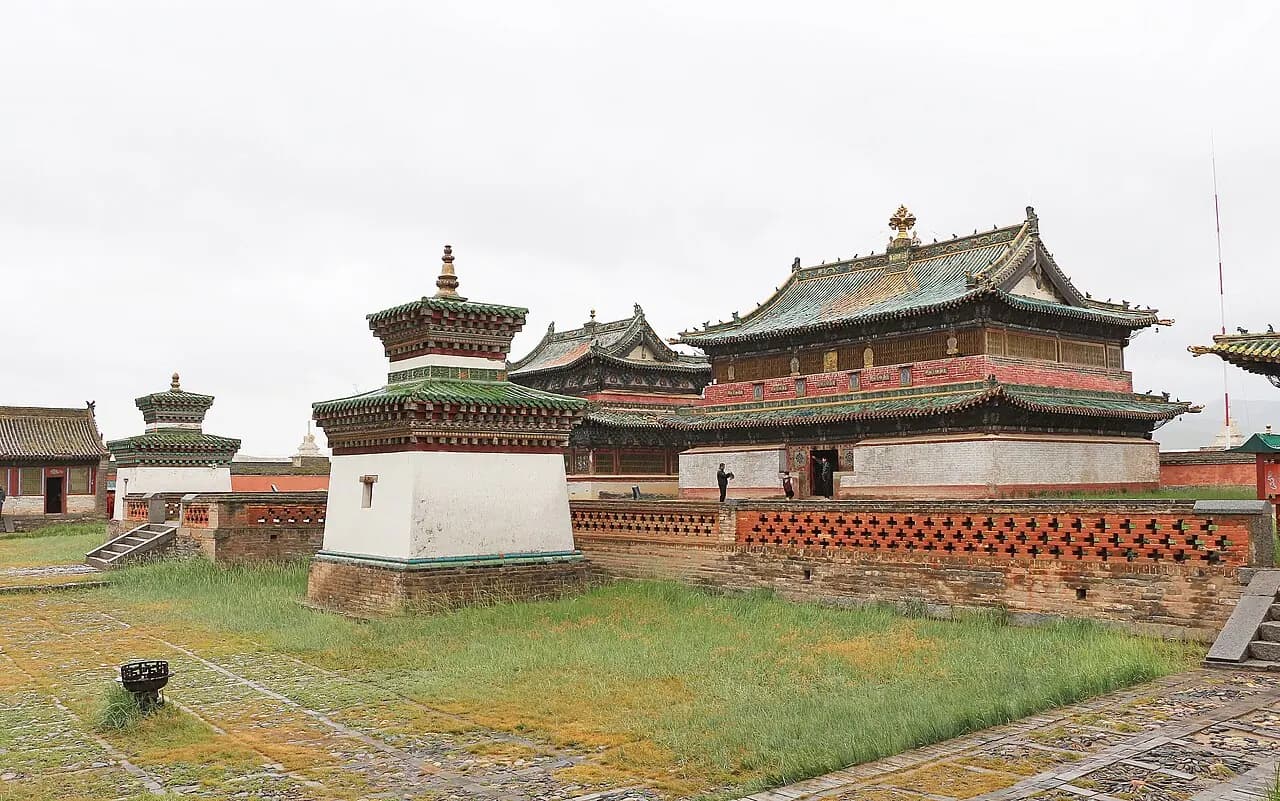
Kharkhorin & Erdene Zuu
Mongolia's oldest surviving Buddhist monastery, built on the ruins of the imperial capital Karakorum.
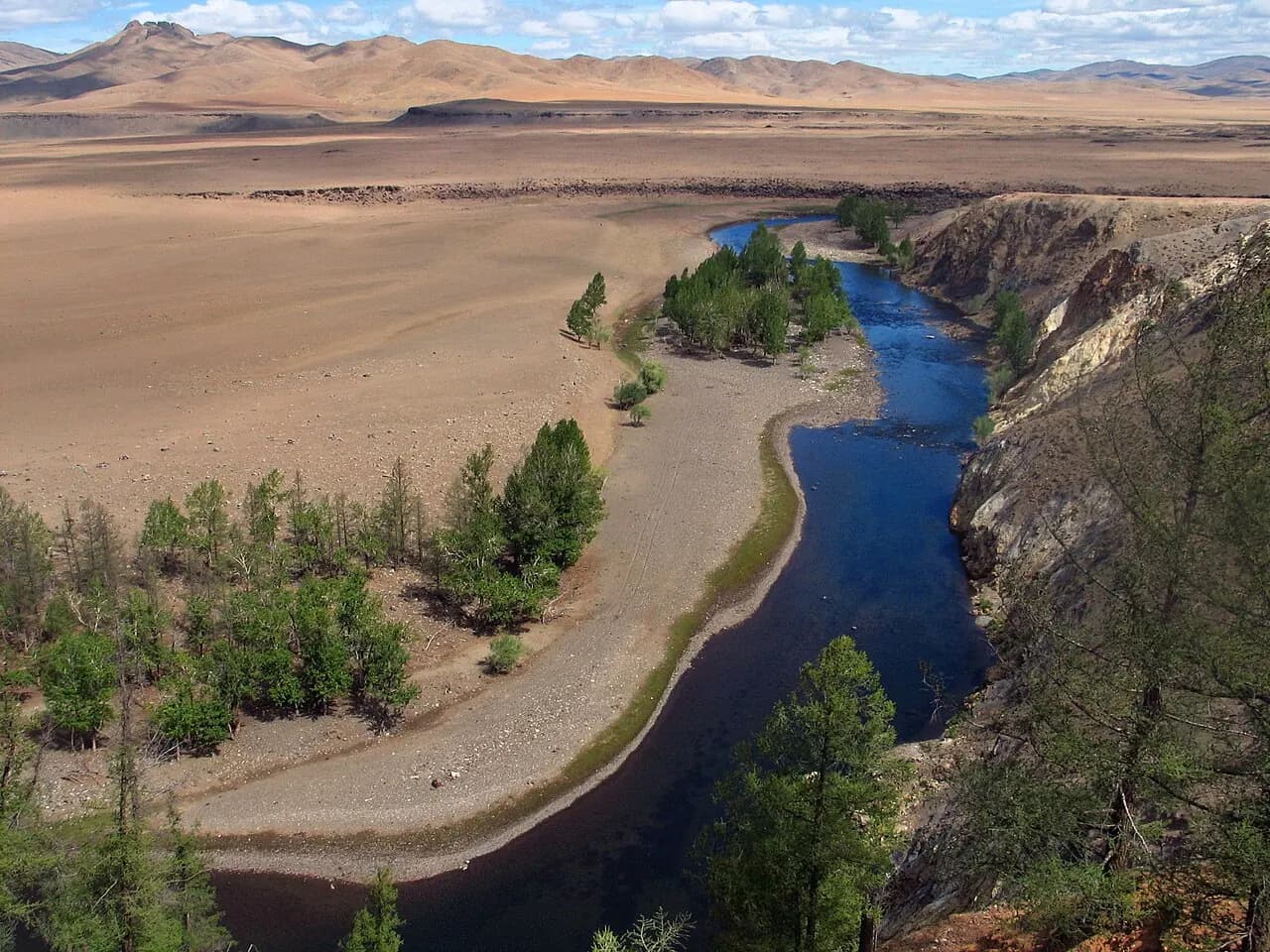
Orkhon Valley & Ulaan Tsutgalan
A 20 m waterfall, nomad summer camps and Tövkhön monastery.
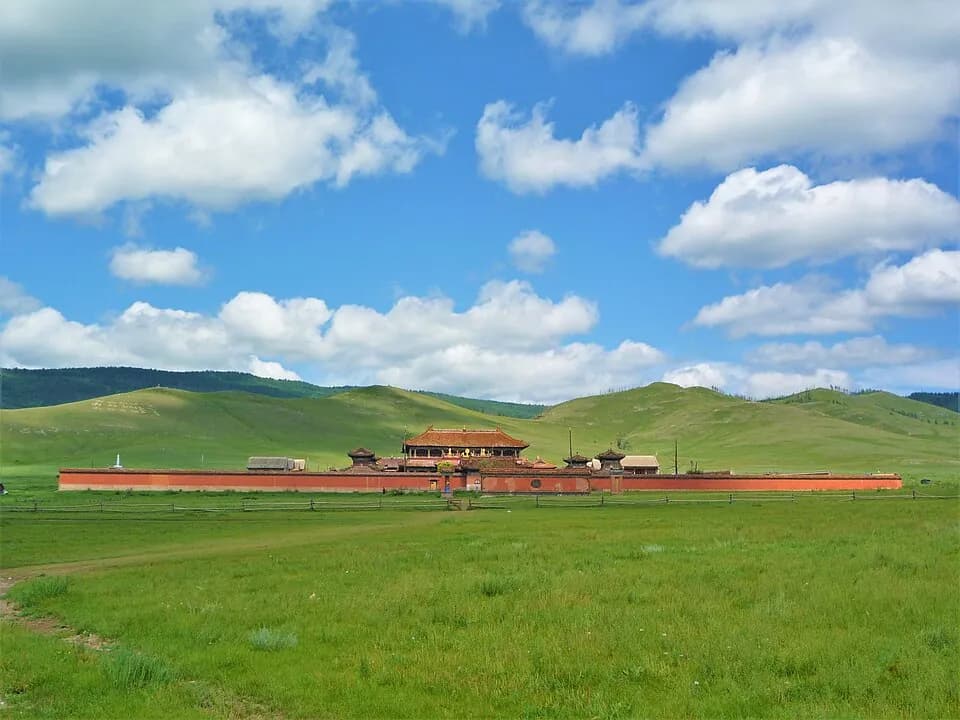
Amarbayasgalant Monastery
An 18th-century Qing-era monastery built for Zanabazar in the remote Iven valley of Selenge.
Frequently asked questions
Who was Zanabazar?
Zanabazar (1635–1723), known as Öndör Gegeen, was the first Jebtsundamba Khutuktu, the head of Tibetan Buddhism among the Khalkha Mongols. He was also a sculptor, the creator of the Soyombo script in 1686 and a key political figure of 17th-century Mongolia.
Where can I see Zanabazar's sculptures?
In Ulaanbaatar, the Zanabazar Museum of Fine Arts holds his White Tara, the Bogd Khan Palace Museum displays a Green Tara and Tara series, and the Choijin Lama Temple Museum and Gandan Monastery hold further works attributed to him. Check opening hours locally.
What happened at Dolon Nor in 1691?
At Dolon Nor, in today's Inner Mongolia, the Khalkha rulers, backed by Zanabazar, accepted the Qing Kangxi Emperor as overlord in return for protection against the Dzungar ruler Galdan. Khalkha remained under Qing rule until 1911.