Buddhism in Mongolia
Buddhism in Mongolia: its history from Kublai Khan to Zanabazar, the 1930s purges, revival after 1990, Gandan and Erdene Zuu monasteries and practice today.
3 min read · Updated
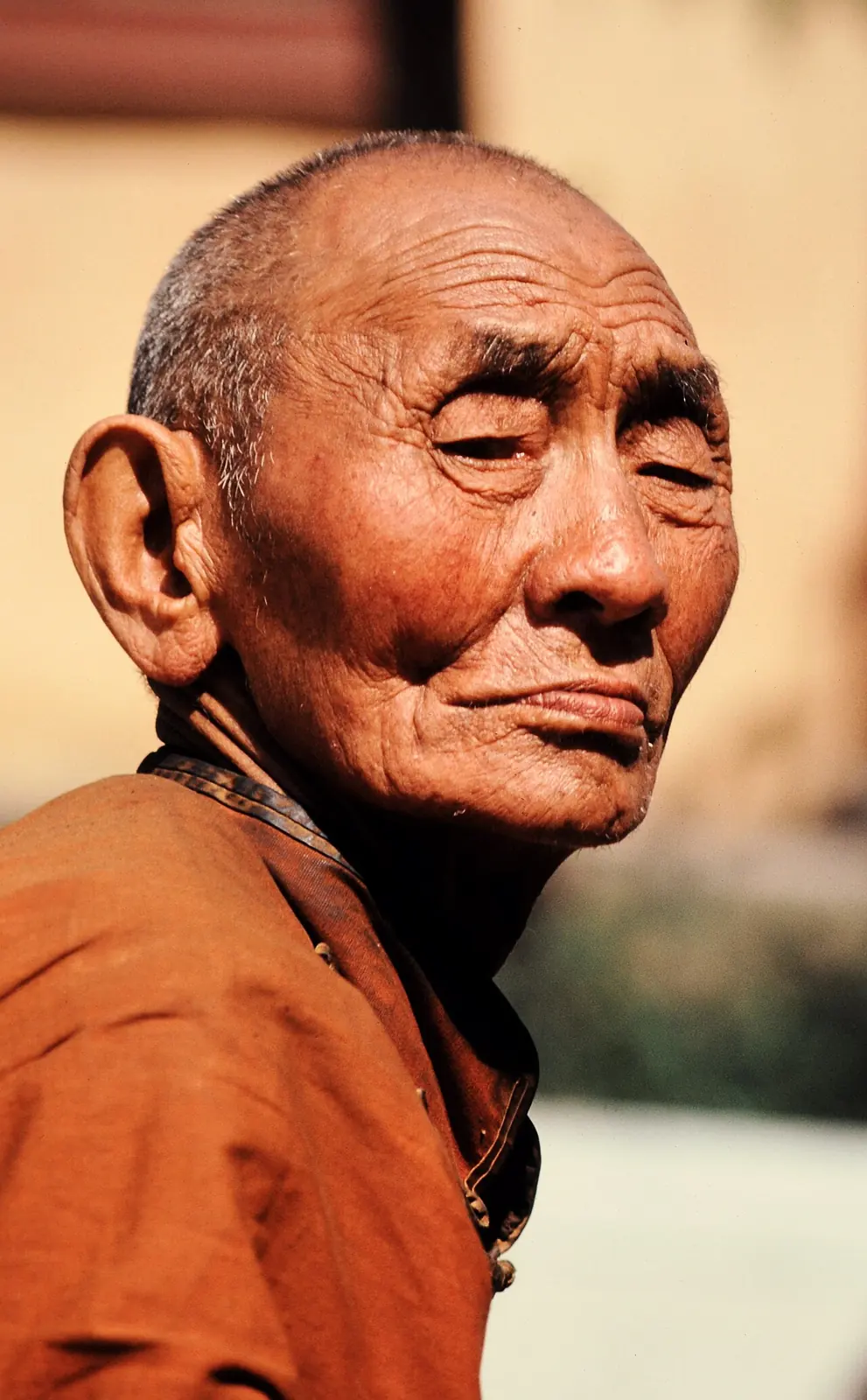
Photo: Hans Bernhard ( Schnobby ) · CC BY-SA 3.0 · Wikimedia Commons
Buddhism in Mongolia is mainly the Tibetan tradition, especially the Gelug school, and it has shaped Mongolian art, learning and daily life for more than four centuries. Almost wiped out in the 1930s, it revived rapidly after the democratic changes of 1990, and today a little over half of Mongolians identify as Buddhist (2020 census). For travellers, monasteries such as Gandan in Ulaanbaatar and Erdene Zuu in Kharkhorin are among the most rewarding places to visit.
Early contacts and the Mongol Empire
Buddhism reached the Mongolian steppe early through neighbouring peoples such as the Uyghurs and Khitans. During the Mongol Empire, Kublai Khan formed a close relationship with the Tibetan lama Phagpa of the Sakya school, who became an important religious adviser at the Yuan court. After the empire's fall in the 14th century, however, Buddhism faded among ordinary Mongols, and older shamanic practices remained strong.
The 16th-century revival and Erdene Zuu
The lasting conversion came in the late 16th century. In 1578 Altan Khan of the Tümed met the Tibetan lama Sonam Gyatso and gave him the title Dalai Lama, "dalai" being the Mongolian word for ocean. Monasteries soon spread across the country. In 1585 Abtai Sain Khan founded Erdene Zuu near the ruins of the old imperial capital Karakorum. Its long white wall topped with 108 stupas is one of the most recognisable sights in Mongolia, and it is part of the Orkhon Valley Cultural Landscape World Heritage Site.
Zanabazar and the Bogd Khans
Zanabazar (1635–1723), recognised as the first Jebtsundamba Khutugtu, became the spiritual head of Buddhism in Khalkha Mongolia. He was also a brilliant artist whose gilded bronze sculptures are national treasures, and he created the Soyombo script. His line of reincarnations led to the eighth Jebtsundamba Khutugtu, the Bogd Khan, who became head of state when Mongolia declared independence from Qing rule in 1911 and ruled until his death in 1924.
Repression in the 1930s
Under the socialist government, and with Soviet backing, religion came under heavy attack. In the late 1930s the great majority of Mongolia's monasteries were closed or destroyed, and many thousands of lamas were executed, imprisoned or forced to give up monastic life. Only a few buildings survived, mostly as museums. Gandan Monastery reopened in 1944 as the country's single functioning monastery, under strict state control.
Revival after 1990 and Gandan Monastery
After 1990, Buddhism returned openly. Monasteries were rebuilt, young monks were trained, and festivals such as the masked tsam dance were revived. Gandan Tegchenling Monastery in Ulaanbaatar is the centre of this revival and the seat of Mongolian Buddhism. Its tall temple houses the Migjid Janraisig statue, a figure of Avalokiteshvara about 26 m high, rebuilt in 1996 to replace the original removed in the 1930s.
Buddhism in daily life today
Many Mongolians visit monasteries for blessings, astrology and advice before journeys, exams or important decisions. Buddhist and older folk practices often blend, as at ovoo, the stone cairns where travellers stop to circle clockwise and leave an offering. Tsagaan Sar, the Lunar New Year, includes temple visits for many families.
Visiting monasteries: etiquette
- Walk clockwise around temples, stupas and prayer wheels.
- Dress modestly, remove hats inside and speak quietly.
- Ask before taking photos inside temples; some charge a fee or forbid photography.
- Do not touch statues or ritual objects, and never point your feet at an altar.
- Morning prayers are the best time to visit; check current times at the monastery.
Places in this guide
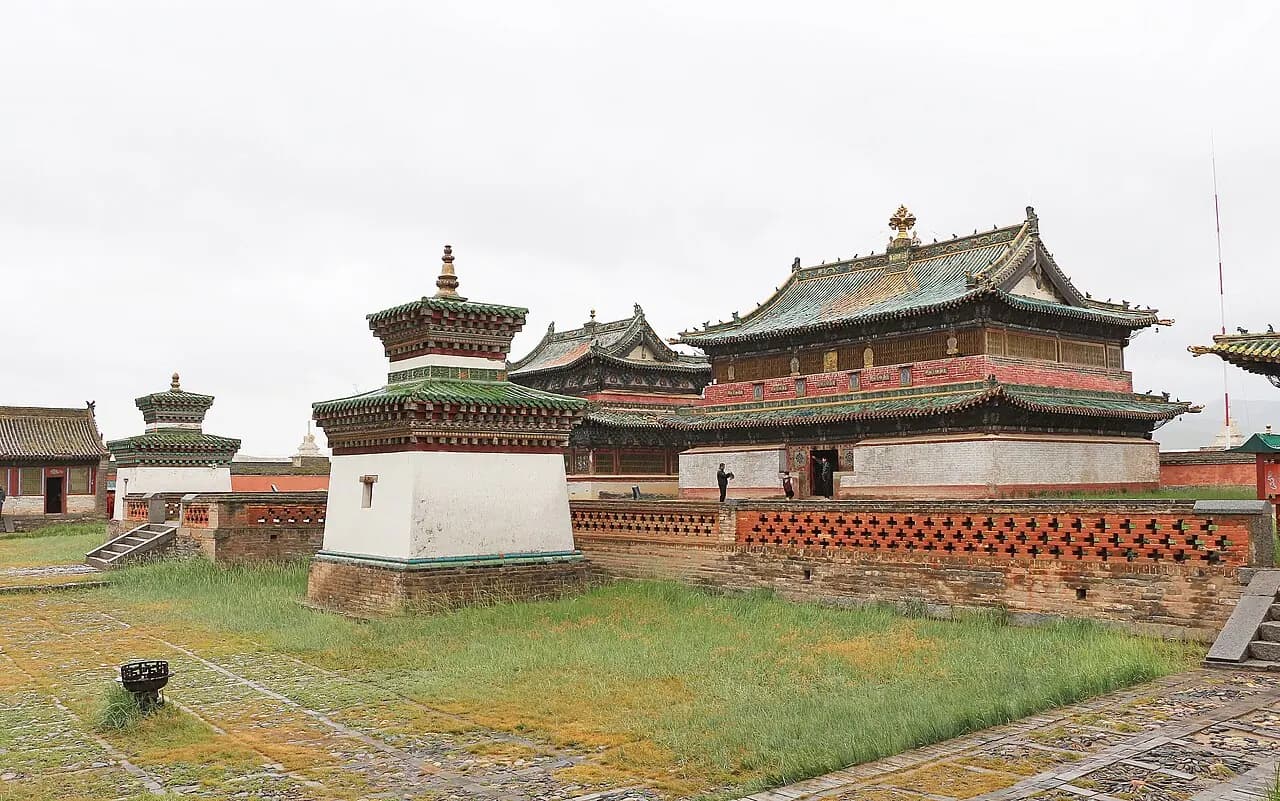
Kharkhorin & Erdene Zuu
Mongolia's oldest surviving Buddhist monastery, built on the ruins of the imperial capital Karakorum.
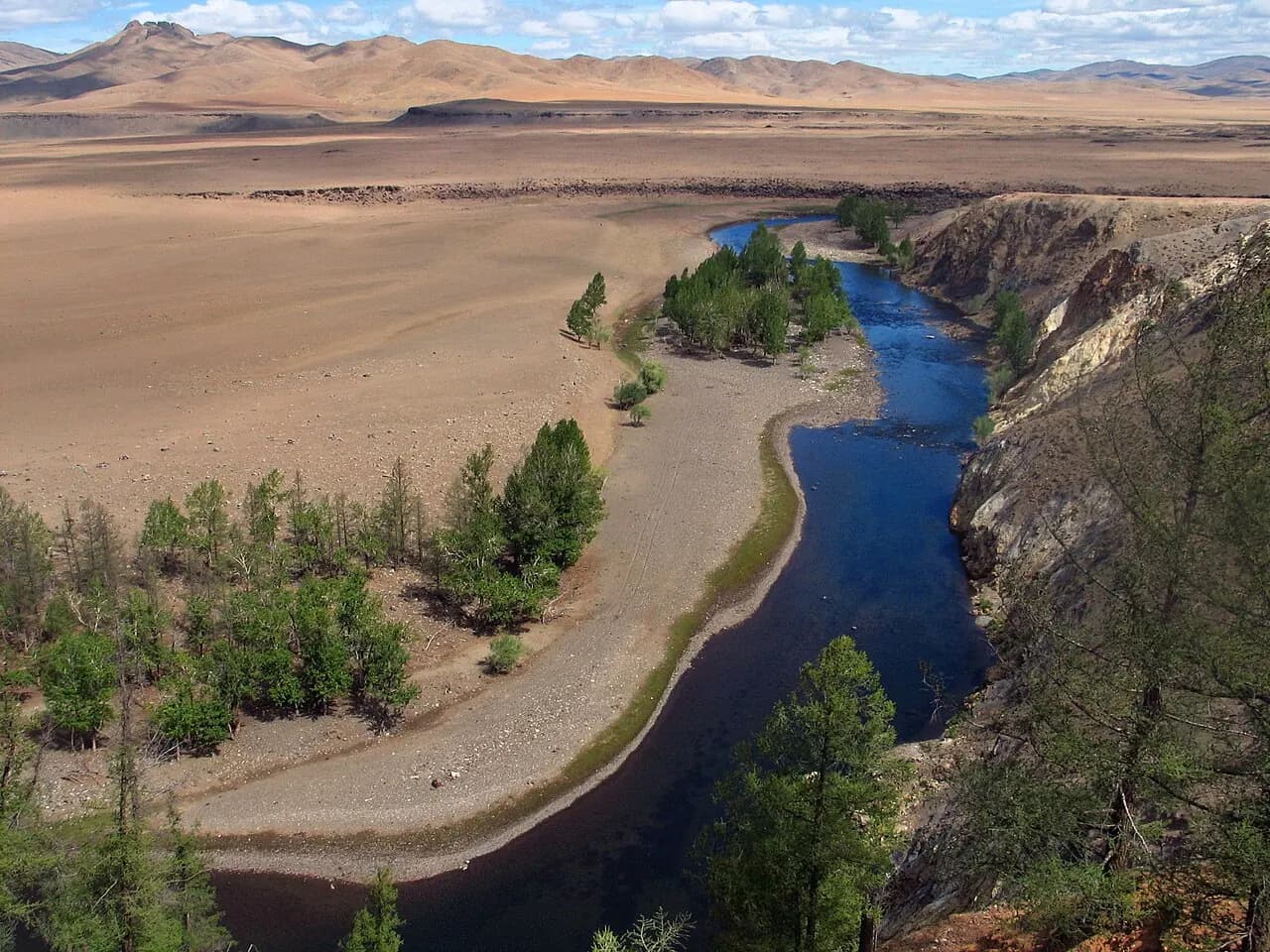
Orkhon Valley & Ulaan Tsutgalan
A 20 m waterfall, nomad summer camps and Tövkhön monastery.
Frequently asked questions
What type of Buddhism is practised in Mongolia?
Mainly Tibetan Buddhism, above all the Gelug school, which became dominant after the 16th-century conversion led by Altan Khan.
Can tourists visit Gandan Monastery?
Yes. Visitors are welcome, especially during morning prayers; dress modestly, walk clockwise and ask before photographing inside temples.
How old is Erdene Zuu Monastery?
It was founded in 1585 near the ruins of Karakorum, making it one of the oldest surviving Buddhist monasteries in Mongolia.