Writing Systems of Mongolia: 800 Years of Mongolian Scripts
The writing systems of Mongolia over 800 years: Uyghur-Mongolian, Phags-pa, Clear Script, Soyombo, a brief Latin alphabet and Cyrillic, and why so many.
4 min read · Updated
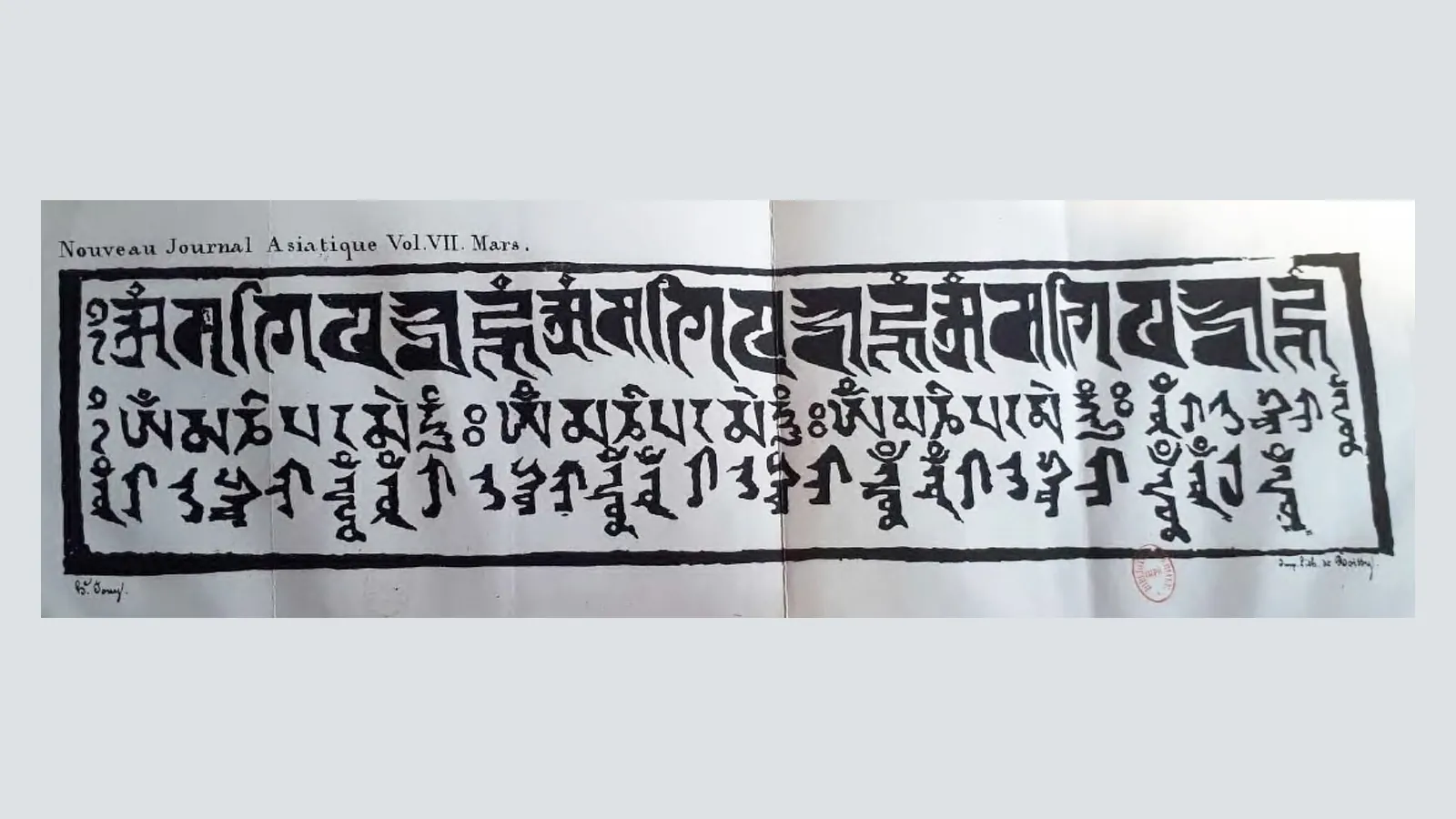
Photo: Be Jouy · Public domain · Wikimedia Commons
Mongolian has been written in more than half a dozen scripts over roughly 800 years. The vertical Uyghur-Mongolian script came first, in the early 13th century, followed by 'Phags-pa (1269), the Clear Script (1648), Zanabazar's Soyombo (1686) and Horizontal Square scripts, a short-lived Latin alphabet, and Cyrillic, which has been Mongolia's everyday script since the 1940s.
Uyghur-Mongolian script: the first Mongolian alphabet
According to traditional accounts, Chinggis Khaan adopted writing after defeating the Naimans in 1204, when a captured Uyghur scribe, Tata-tonga, taught the Uyghur script to Mongol princes. Adapted for Mongolian, it became Mongol bichig (монгол бичиг), written in vertical columns from left to right. The oldest known inscription, the Stele of Yisüngge, dates from around 1224 or 1225. In 1587 the scholar Ayuush Güüsh added extra letters, called Galik, to write Tibetan and Sanskrit terms. It has never fallen out of use and is still standard in Inner Mongolia.
The Secret History in Chinese characters
The Secret History of the Mongols, the 13th-century chronicle of Chinggis Khaan's life, was written in Mongolian script, but that original is lost. It survives because Ming dynasty officials, around the late 14th century, transcribed its Mongolian sounds in Chinese characters, with a Chinese gloss, to train interpreters. Scholars reconstruct the Mongolian text from these copies.
'Phags-pa: Kublai Khan's "new Mongolian script" (1269)
Kublai Khan commissioned the Tibetan lama Drogön Chögyal Phagpa to design a single script for all the languages of his Yuan empire. Based on Tibetan letters but written vertically, it was made official by an imperial edict in 1269 for edicts and official documents. It never replaced the older script in everyday use, and after the Yuan dynasty fell in 1368 the Mongols returned to Mongol bichig. It survives on seals and on paiza, the metal passes carried by imperial officials.
Clear Script: Zaya Pandita's Oirat alphabet (1648)
In 1648 the Oirat Buddhist monk Zaya Pandita created the Clear Script, Todo bichig (тод бичиг), by modifying the Uyghur-Mongolian letters. Extra marks show vowels, vowel length and voicing, so that every sound of spoken Oirat could be written unambiguously and Tibetan and Sanskrit could be transcribed. The Kalmyks of Russia used it until 1924, and some Oirats in Xinjiang, China, still use it.
Zanabazar's Soyombo and Horizontal Square scripts
Zanabazar, the first Jebtsundamba Khutuktu, created the Soyombo script in 1686 to write Mongolian, Tibetan and Sanskrit, mainly for Buddhist texts. It was the first Mongolian script written horizontally from left to right, and its opening sign became the Soyombo symbol, a national emblem since 1911 and today on the flag. The Horizontal Square script, also attributed to Zanabazar, is a Tibetan-based alphabet from around the same period; little is known of how it was used, and it was rediscovered in 1801. Both survive mostly in temple inscriptions. In 1905 the Buryat monk Agvan Dorzhiev also created the Vagindra script for Buryat Mongolian.
Latin and Cyrillic in the 20th century
In 1930 the ruling party decided to switch to a Latin alphabet. It was trialled in the press in the early 1930s, then dropped. A second attempt made Latin official in early 1941, but the decision was reversed within weeks, in March 1941, in favour of Cyrillic. Under strong Soviet influence, Cyrillic was used in all publications and state affairs from 1946. Mongolian Cyrillic has 35 letters: the Russian alphabet plus ө and ү.
Why Mongolian has so many scripts
- Empire: Kublai wanted one script for a multilingual state.
- Buddhism: monks needed to write Tibetan and Sanskrit precisely, which inspired Galik, Soyombo and the Square script.
- Dialects: the Clear Script fitted Oirat speech better than the older spelling.
- Politics: Latin and then Cyrillic followed Soviet alignment, while the revival of Mongol bichig after 1990 reflects national identity. Under the 2015 language law, government bodies must use both Cyrillic and the traditional script for official business from 1 January 2025.
Today the Mongol world is split: Mongolia, Buryatia and Kalmykia write in Cyrillic, while Inner Mongolia uses the vertical script.
Seeing Mongolia's scripts as a visitor
- Cyrillic is everywhere: learning its 35 letters makes menus and signs readable.
- National Museum of Mongolia, Ulaanbaatar: manuscripts in the traditional script.
- Monasteries: look for inscriptions in several scripts at Gandan and Erdene Zuu.
Places in this guide
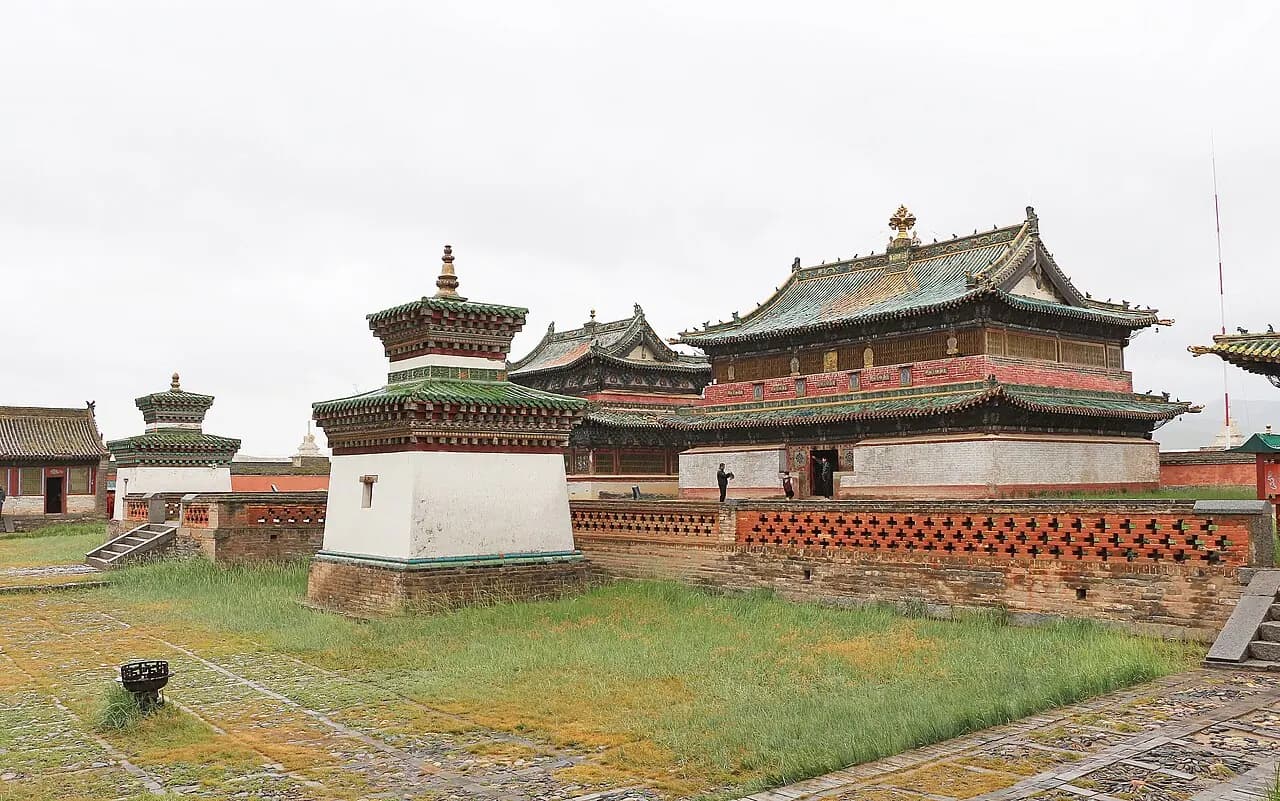
Kharkhorin & Erdene Zuu
Mongolia's oldest surviving Buddhist monastery, built on the ruins of the imperial capital Karakorum.
Frequently asked questions
What alphabet does Mongolia use today?
Mongolia uses a 35-letter Cyrillic alphabet in everyday life, alongside the traditional vertical script, which the 2015 language law requires government bodies to use for official business together with Cyrillic from 1 January 2025.
When did Mongolia switch to Cyrillic?
The decision was taken in 1941, under strong Soviet influence, after a brief attempt to adopt a Latin alphabet was reversed. Cyrillic was used in all publications and state affairs from 1946.
Who created the Soyombo script?
Zanabazar, the first Jebtsundamba Khutuktu, created it in 1686. Its opening sign became the Soyombo symbol, which appears on Mongolia's national flag.