Mongolian Script (Mongol Bichig): The Traditional Vertical Alphabet
The traditional Mongolian script, Mongol bichig, is written in vertical columns. Learn its origins, how it works and its official role since 2025.
4 min read · Updated
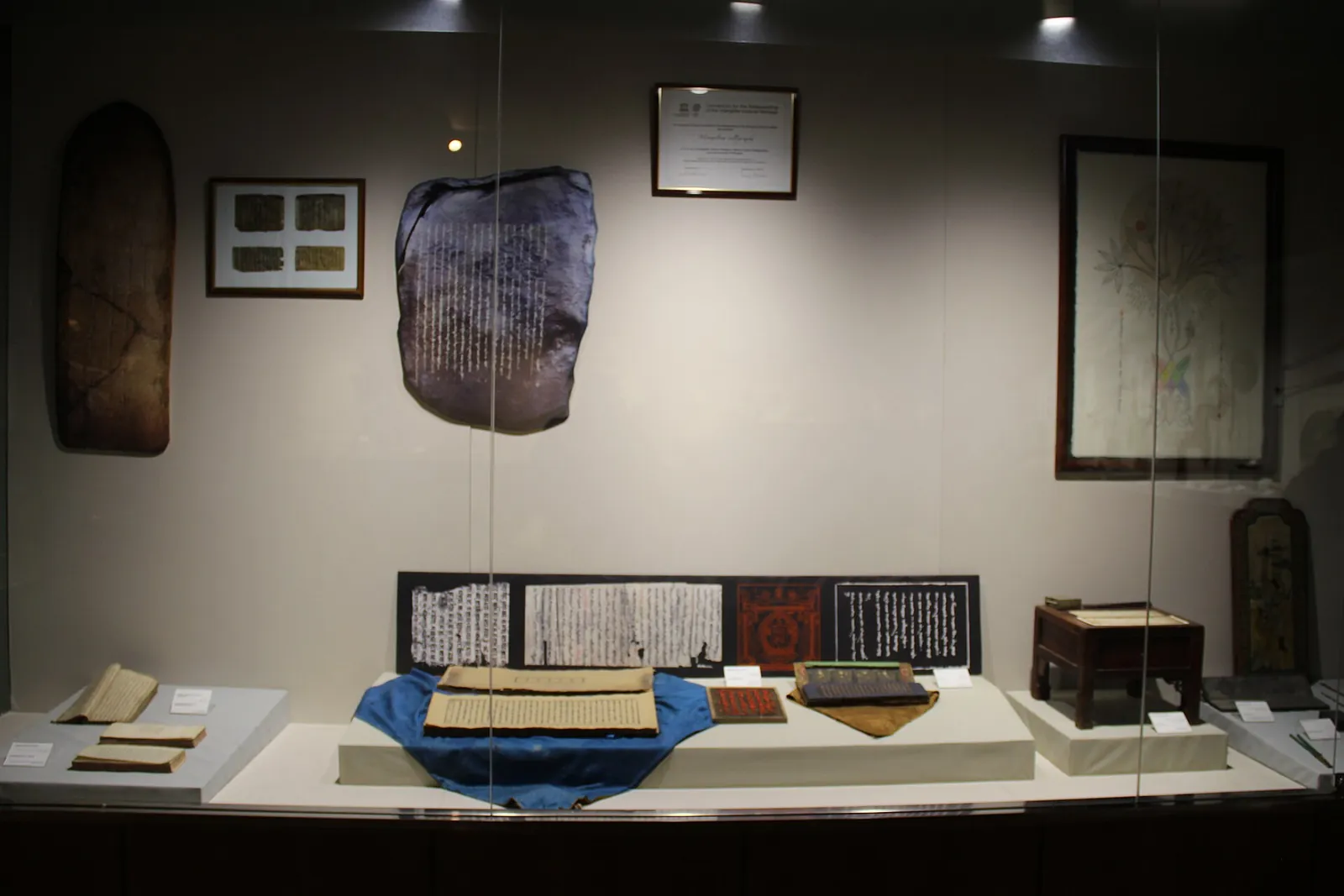
Photo: Gary Todd from Xinzheng, China · CC0 · Wikimedia Commons
The traditional Mongolian script, Mongol bichig (монгол бичиг), is an alphabet written in vertical columns from top to bottom, with the columns running from left to right. Adapted from the Old Uyghur alphabet in the early 13th century, it was the main way of writing Mongolian for more than 700 years until Cyrillic replaced it in the 1940s. Today it is taught in Mongolian schools, appears on signs and banknotes, and since 1 January 2025 the law has required government bodies to conduct official business in it alongside Cyrillic.
Origins of the Mongolian script
According to traditional accounts, after Chinggis Khaan defeated the Naimans in 1204 he captured a Uyghur scribe, Tata-tonga, and had him teach the Uyghur script to the Mongol princes. The Uyghur alphabet came from Sogdian, written horizontally from right to left. The Uyghurs rotated it 90 degrees to write vertical columns like Chinese, which is why Mongolian columns run left to right.
The oldest known inscription in the script is the Stele of Yisüngge, dated to around 1224 or 1225. It records an archery feat by Yisüngge, a nephew of Chinggis Khaan, and the original is in the Hermitage Museum in St Petersburg. The script was later adapted to write Oirat and Manchu.
How the vertical script works
Mongol bichig is a true alphabet, with separate letters for vowels and consonants. Its main features:
- Vertical columns. Each word hangs from top to bottom, and the next column starts to its right.
- A central spine. Letters join along one vertical stroke, much like cursive handwriting.
- Positional forms. Most letters change shape depending on whether they come at the start, middle or end of a word.
- Shared shapes. Some sounds look identical on the page, such as o and u, or ö and ü, and t and d are easily confused. Readers rely on context.
The script also reflects vowel harmony, a key feature of the Mongolian language: a word uses either back vowels or front vowels, with i able to appear in both. The k and g sounds are written with different letters in back-vowel and front-vowel words, and suffixes are chosen to match the word they attach to. Spelling is conservative and reflects an older stage of the language, so the written form of a word can look quite different from modern Khalkha pronunciation.
Decline and revival in Mongolia
In 1941, under strong Soviet influence, Mongolia's government decided to replace the script with Cyrillic, which was used in publications and state affairs from 1946. The vertical script became the "old script", kept in limited use. After the democratic changes of 1990 it was revived in schools and public life, although plans to make it the sole official script were set aside.
The 2015 language law and the 2025 dual-script rule
The Law on the Mongolian Language, adopted on 12 February 2015 and in force from 1 July 2015, defines Mongolian writing as both Cyrillic and the national script. It does not abolish Cyrillic. Key provisions:
- From 1 January 2025, state and local self-governing bodies must conduct official business in both Cyrillic and the national script, introduced in stages under a government programme approved in March 2020.
- Official letters from the President, the Speaker of Parliament and the Prime Minister to foreign counterparts are written in the national script, with a translation attached.
- General schools teach a dedicated course in the script from sixth grade until graduation.
In practice Cyrillic still dominates daily life. In a 2021 survey about 85 percent of civil servants said they needed training in the script, so implementation is gradual: check the current situation locally.
Daily use in Inner Mongolia
Mongols in China never switched to Cyrillic, so in the Inner Mongolia Autonomous Region the vertical script has been in continuous use. It is taught to Mongolian students and appears on street and shop signs beside Chinese. A 2020 policy moving some school subjects to Mandarin-language materials led to widespread protests.
Where to see Mongol bichig
- National Museum of Mongolia, Ulaanbaatar: manuscripts in the script are displayed in the traditional culture galleries.
- Banknotes and official signs: tögrög notes and many government signs carry the script beside Cyrillic.
- Monasteries: gates and inscriptions at Gandan in Ulaanbaatar and Erdene Zuu in Kharkhorin.
- Name souvenirs: calligraphers will write your name in the script. Keep the sheet upright: it reads vertically.
Places in this guide
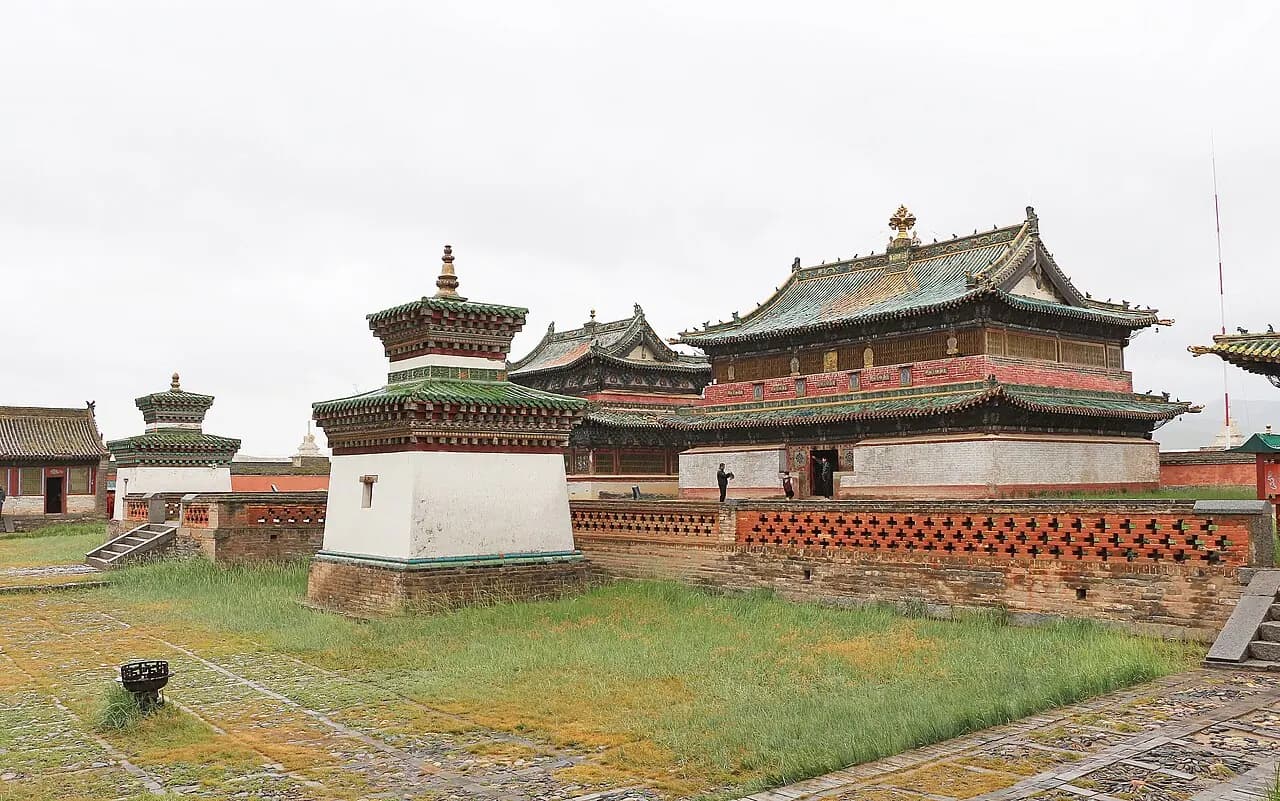
Kharkhorin & Erdene Zuu
Mongolia's oldest surviving Buddhist monastery, built on the ruins of the imperial capital Karakorum.
Frequently asked questions
Which direction is the Mongolian script read?
The traditional Mongolian script is read from top to bottom in vertical columns, and the columns run from left to right across the page.
Does Mongolia still use the traditional script?
Yes, alongside Cyrillic. Cyrillic remains the everyday script, but the traditional script is taught in schools, and since 1 January 2025 the language law has required state and local government bodies to conduct official business in both scripts.
Where is the Mongolian script used every day?
In the Inner Mongolia Autonomous Region of China, where Mongols never switched to Cyrillic. There it is taught to Mongolian students and appears on street and shop signs beside Chinese.