Religion in Mongolia
Religion in Mongolia: an overview of Buddhism, shamanism and Tengrism, Islam among Kazakhs, Christianity, religious freedom and how to visit sacred sites.
3 min read · Updated
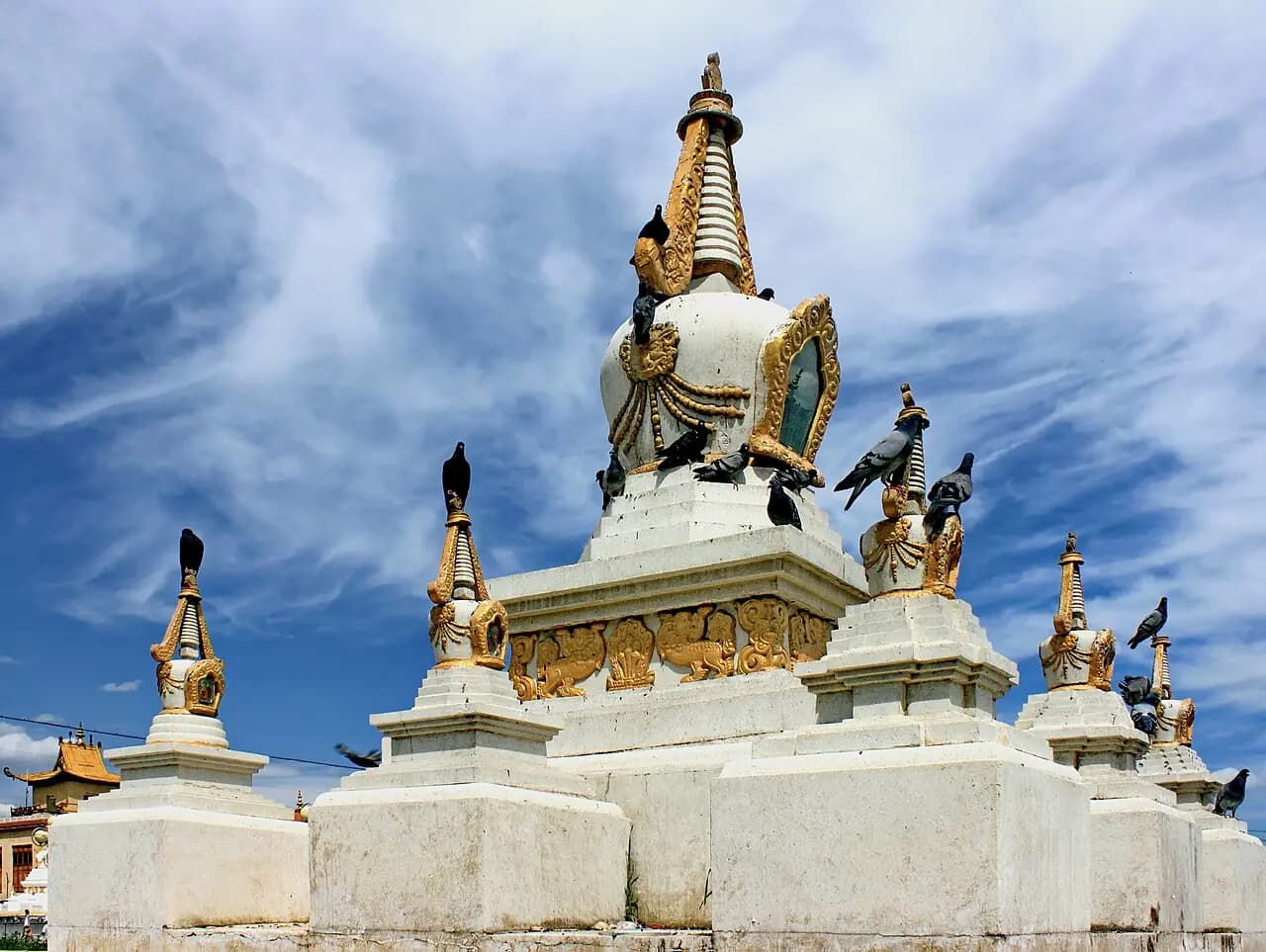
Photo: Marcin Konsek · CC BY-SA 4.0 · Wikimedia Commons
Religion in Mongolia is diverse but predominantly Buddhist. Tibetan-style (Vajrayana) Buddhism is the largest faith, shamanic and Tengrist beliefs remain widespread, the Kazakhs of the far west are mostly Muslim, and a small Christian community has grown since 1990. The constitution guarantees freedom of religion, and a large share of people describe themselves as having no religion.
How religious is Mongolia?
In the 2020 national census, roughly half of adults identified as Buddhist and around 40 percent said they had no religion, while Islam (about 3 percent), shamanism (about 2.5 percent) and Christianity (about 1 percent) were much smaller. These are approximate figures; the National Statistics Office of Mongolia publishes the detailed results. Many people who call themselves non-religious still follow Buddhist or shamanic customs, such as asking a lama to choose an auspicious day or making offerings at an ovoo.
Buddhism in Mongolia
Buddhism reached the Mongols during the empire, but it became the dominant faith from the late 16th century, when the Gelug school of Tibetan Buddhism spread with the support of Altan Khan. Monasteries became centres of learning, art and medicine. In the 1930s, under the communist regime, most monasteries were destroyed and thousands of monks were killed or forced into lay life. Since the democratic transition of 1990, Buddhism has revived: Gandan Monastery in Ulaanbaatar and Erdene Zuu in Kharkhorin are the best-known places to visit, and many smaller temples have been rebuilt across the country.
Shamanism and Tengrism
Older than Buddhism, Mongolian shamanism centres on Tenger, the Eternal Blue Sky, on the spirits of nature and ancestors, and on the shaman — böö for a man, udgan for a woman — who mediates with them. "Tengrism" is the term often used for this belief in sky and earth, which the rulers of the Mongol empire also honoured. Many customs visitors notice come from this tradition: ovoo cairns on passes and hilltops, blue khadag scarves, sprinkling milk to the sky, and respect for springs, rivers and mountains. Shamanic practice is especially visible among the Buryats and Darkhads of northern Mongolia, and it has grown in Ulaanbaatar since 1990.
Islam among the Kazakhs
Most of Mongolia's Muslims are Kazakhs living in Bayan-Ölgii province in the far west, with smaller communities in Khovd province and Ulaanbaatar. They are Sunni Muslims, and Islamic practice blends with Kazakh traditions such as eagle hunting and the Nauryz spring festival. Ölgii town has mosques, and Kazakh is widely spoken there.
Christianity and freedom of religion
Christian churches, including Catholic, Protestant and Orthodox congregations, have grown since religious freedom was restored in the early 1990s. The Catholic community is small but drew international attention when Pope Francis visited Ulaanbaatar in 2023. The 1992 constitution separates religion and state and protects freedom of belief. Religious organisations must register with the authorities, and the activities of foreign-funded missions are sometimes debated publicly.
Practical tips for visiting religious sites
- Walk clockwise around temples, stupas, prayer wheels and ovoo.
- Dress modestly, remove your hat inside temples and keep your voice low.
- Ask before taking photographs inside temples; some charge a photo fee or forbid photos.
- Don't point your feet towards altars or touch religious objects without permission.
- At an ovoo you may add a stone and circle it three times clockwise.
- Morning prayer ceremonies at Gandan Monastery are open to respectful visitors; check times on arrival.
Places in this guide
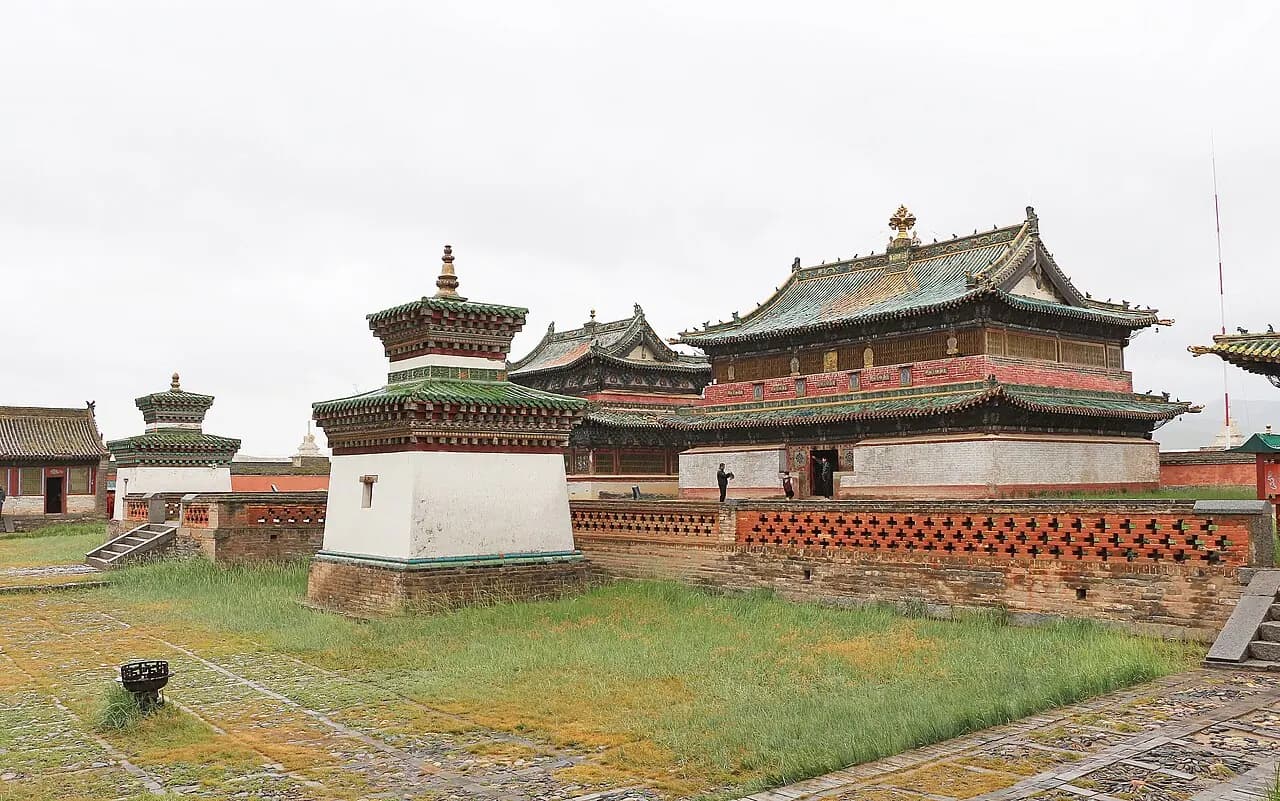
Kharkhorin & Erdene Zuu
Mongolia's oldest surviving Buddhist monastery, built on the ruins of the imperial capital Karakorum.
Frequently asked questions
What is the main religion in Mongolia?
Tibetan-style Buddhism is the largest religion; in the 2020 census roughly half of adults identified as Buddhist. A large minority said they had no religion.
Is there freedom of religion in Mongolia?
Yes. The 1992 constitution guarantees freedom of belief and separates religion from the state, although religious organisations must register with the authorities.
Do Mongolians still practise shamanism?
Yes. Relatively few name shamanism as their main faith, but customs such as ovoo offerings and sprinkling milk are widespread, and shamanic rituals are active, especially in the north.