Ulaanbaatar Quick Facts
Ulaanbaatar quick facts for travellers: population, history from Urga to capital, districts, climate, airport, time zone and the key sights to know.
3 min read · Updated
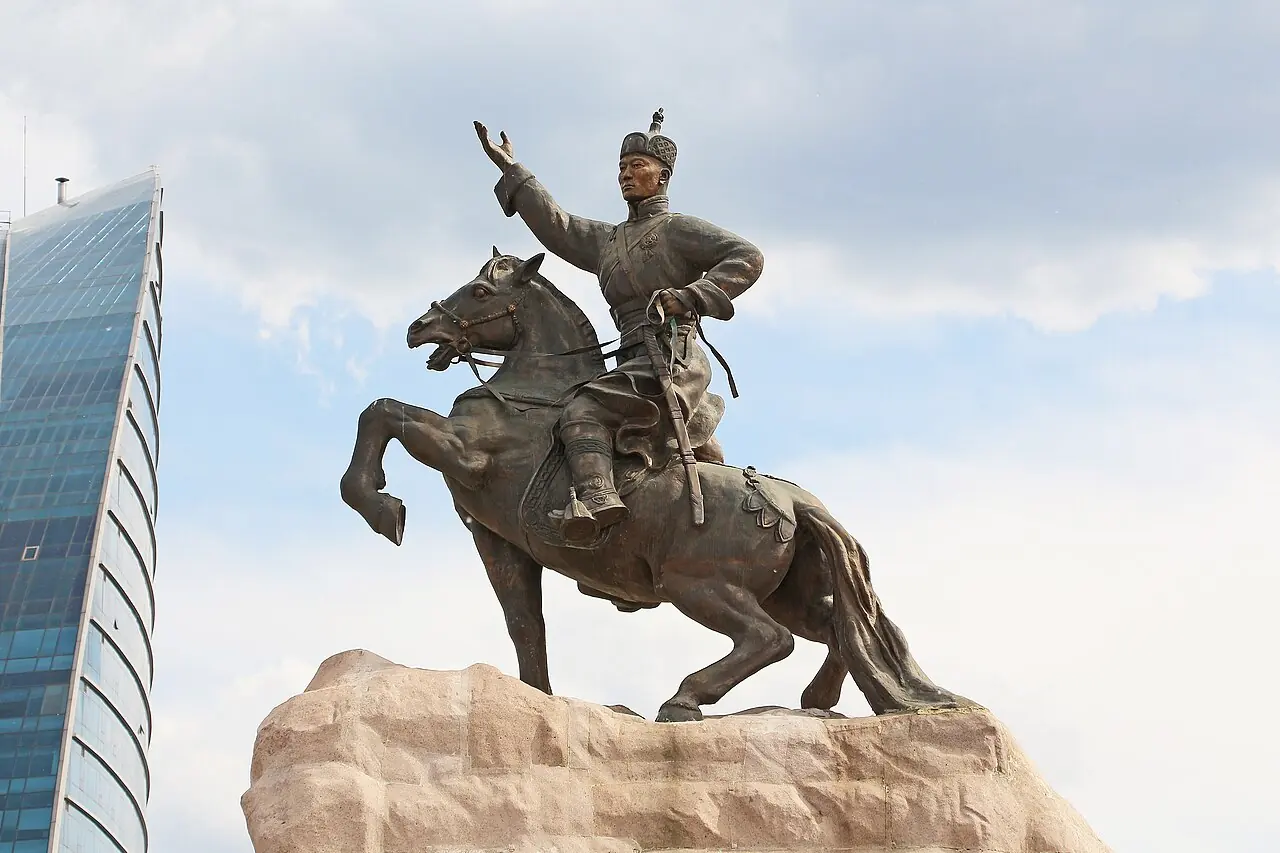
Photo: Bernard Gagnon · CC0 · Wikimedia Commons
Ulaanbaatar is the capital and by far the largest city of Mongolia, home to roughly 1.7 million people (2024), close to half of the country's population. It lies at about 1,350 m above sea level in the valley of the Tuul River and is often described as the coldest national capital in the world by average annual temperature.
Ulaanbaatar key facts at a glance
- Name: Ulaanbaatar (Улаанбаатар) means "Red Hero". Earlier names include Örgöö (known in European sources as Urga) and Niislel Khüree.
- Population: about 1.7 million (2024), growing through steady migration from the countryside.
- Elevation: roughly 1,350 m, which makes summer sun strong and nights cool.
- Administration: nine districts (düüreg). Six form the urban core, while Nalaikh, Baganuur and Bagakhangai lie well outside the centre.
- Time zone: UTC+8, with no daylight saving time.
- Currency: Mongolian tögrög (MNT).
- Main airport: Chinggis Khaan International Airport, opened in 2021, about 50 km south of the city centre.
- Rail: the city is the main stop on the Trans-Mongolian Railway between Russia and China.
From monastery camp to modern capital
The city began in 1639 as a mobile monastic camp founded for Zanabazar, the first Jebtsundamba Khutugtu and spiritual head of Mongolian Buddhism. For well over a century the camp of gers and temples moved between river valleys of central Mongolia, before settling on its present site in 1778. It grew into a religious and trading centre known as Ikh Khüree. In 1924, when the Mongolian People's Republic was proclaimed, it was renamed Ulaanbaatar. Socialist-era planning gave the centre its broad avenues, apartment blocks, theatres and the university, and since 1990 glass towers, shopping malls and new residential suburbs have spread across the valley.
Climate and air quality
Ulaanbaatar has a sharply continental climate. January nights regularly fall below -30 °C, while summer afternoons often reach 25–30 °C. Most of the year's rain falls in July and August, frequently as short afternoon showers. In winter, smoke from coal-burning stoves in the ger districts and traffic exhaust can make air quality very poor, especially from December to February. Visitors sensitive to pollution should check a live air quality index and consider a well-fitting mask.
City layout: centre, districts and ger areas
The heart of the city is Sükhbaatar Square, faced by the Government Palace with its large seated statue of Chinggis Khaan. Peace Avenue (Enkh Taivny Örgön Chölöö) runs east–west through the centre and is the main reference line for finding your way. Gandan Monastery stands on a hill to the west, while the Zaisan Memorial and the newer Khan-Uul neighbourhoods rise to the south towards Bogd Khan Mountain. A large share of residents live in ger districts on the hills to the north, east and west, where families live in gers and detached houses on fenced plots. Traffic congestion in the centre is heavy at rush hour.
Sights worth knowing
- Gandan Monastery, the country's main Buddhist monastery
- Choijin Lama Temple Museum, a preserved temple complex in the centre
- Bogd Khan Palace Museum, the winter residence of the last Bogd Khan
- National Museum of Mongolia, for history from the Stone Age to today
- Chinggis Khaan National Museum, opened in 2022
- Zaisan Memorial, for a panoramic view over the city
- Bogd Khan Mountain, often cited as one of the oldest protected areas in the world, with protection dating to the 18th century
Practical tips
- Allow at least 1–1.5 hours to reach the airport at busy times.
- Use a ride-hailing app or an official taxi and agree on the fare before setting off.
- Museum opening days and hours change, and many museums close one or two days a week, so check with each museum before you go.
- Cross roads carefully: drivers do not always give way to pedestrians.
- Carry a copy of your passport, and keep the original safe at your hotel.
Frequently asked questions
How many people live in Ulaanbaatar?
About 1.7 million people (2024), which is close to half of Mongolia's total population.
Is Ulaanbaatar really the coldest capital in the world?
By average annual temperature it is usually ranked as the coldest national capital, with January nights often below -30 °C.
How far is the airport from central Ulaanbaatar?
Chinggis Khaan International Airport is about 50 km south of the centre; the drive can take over an hour in heavy traffic.