Mongolia Weather & Climate
Mongolia weather and climate by season and region: temperatures, rain and wind in Ulaanbaatar, the Gobi, the north, the Altai and the eastern steppe.
3 min read · Updated
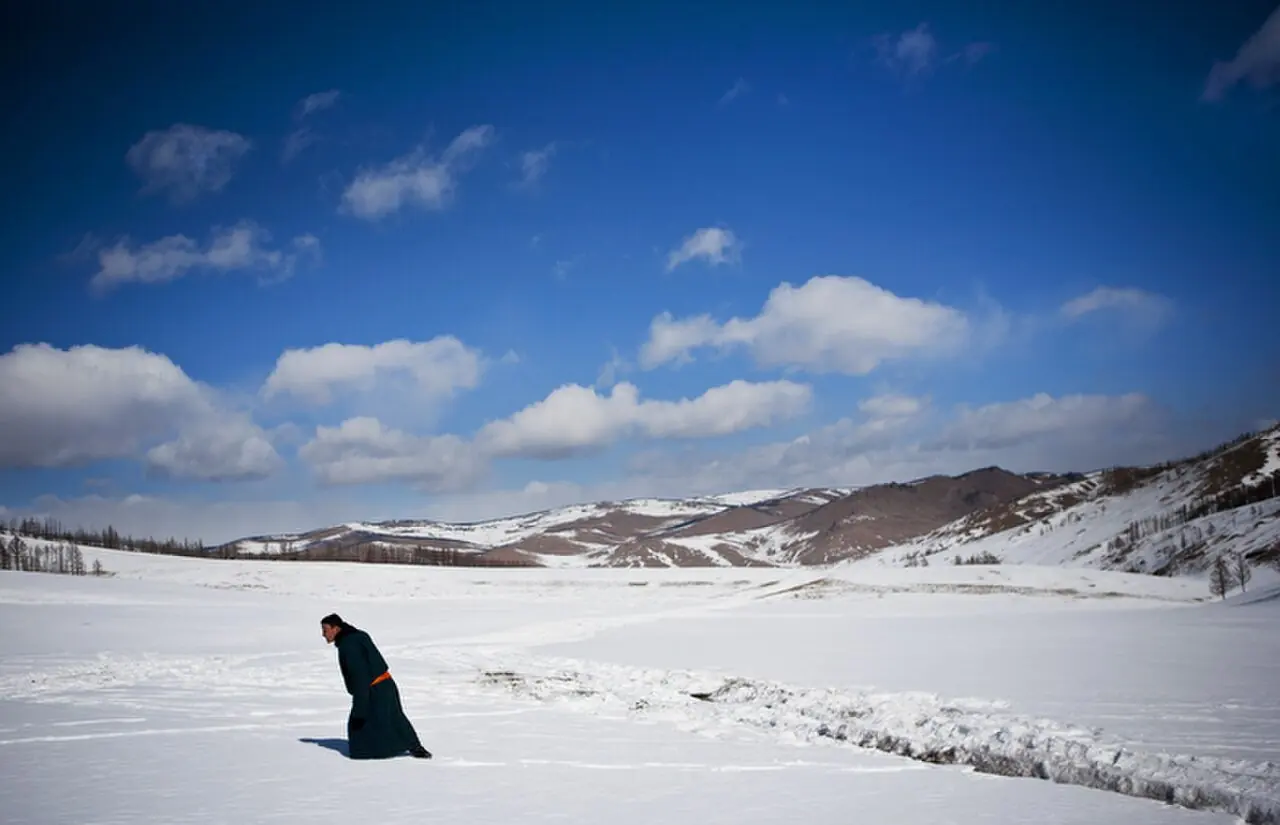
Photo: Taylor Weidman/The Vanishing Cultures Project · CC BY-SA 3.0 · Wikimedia Commons
Mongolia has an extreme continental climate: short, warm summers, long and very cold winters, low humidity and plenty of sunshine. Temperatures vary hugely by season and region, from around +40 °C in the Gobi in summer to below −40 °C in northern valleys in winter, and daily swings of 15–20 °C are common. Clear skies are the norm in every season, which is why Mongolia is often called the Land of the Eternal Blue Sky.
Why Mongolia's climate is so extreme
Mongolia lies far from any ocean, at a high average elevation of about 1,500 m, and is ringed by mountains that block moist air. The result is dry air, little cloud and rapid heating and cooling. Most of the year's limited precipitation falls in summer, mainly in July and August. Winter snowfall is usually light, but when heavy snow or ice covers the pastures it can cause a dzud, a winter disaster in which large numbers of livestock die.
Mongolia weather by season
- Spring (March–May): the most changeable season. Thawing ground, strong winds and dust storms, especially in the Gobi and southern steppe. Days can be warm and nights below freezing; snow is possible into May.
- Summer (June–August): warm to hot. Ulaanbaatar typically reaches the mid-20s °C in the afternoon, the Gobi can reach 35–40 °C, and the north and mountains are cooler. Afternoon thunderstorms are common in July and August.
- Autumn (September–October): clear, crisp and short. September days are pleasant, but frosts arrive early and the first snow can fall in the north and west in September.
- Winter (November–February): very cold and dry. Ulaanbaatar's January average is around −20 °C, with nights well below −30 °C during cold spells. Skies are mostly clear.
Mongolia weather by region
Ulaanbaatar and central Mongolia
The capital sits in the Tuul River valley at about 1,350 m. Summers are pleasant and winters bitter, and in winter cold air and smoke are trapped in the valley, causing heavy air pollution. Kharkhorin and the Orkhon Valley have a similar climate, slightly warmer in summer.
Gobi Desert (south)
The driest region, with hot summer days, cool nights and very little rain. Winters are cold but usually less severe than in the north. Spring winds are strongest here.
North (Khövsgöl, Selenge, Khentii)
Forested and wetter, with cooler summers and the most rain. Lake Khövsgöl freezes over completely in winter, usually from around December until May.
West (Altai and the Great Lakes Depression)
High mountains and basins make the west the most variable region. Around Altai Tavan Bogd the weather can change within hours, and snow is possible even in summer at altitude. The Uvs Lake basin has some of the country's coldest winters.
East (steppe)
Wide open grassland with warm summers and windy, cold winters. It is often slightly wetter than the Gobi and greener in summer.
Practical tips
Countryside forecasts are less reliable than those for the city, so plan for a range of conditions rather than an exact temperature. Official forecasts are issued by Mongolia's National Agency for Meteorology and Environmental Monitoring, and your guide or driver will follow local updates. Always carry a warm layer and a waterproof, even in July. The sun is strong at altitude, so use high-factor sunscreen and sunglasses. In winter, limit exposed skin, watch for frostbite on cheeks and fingers, and keep phone batteries warm inside your jacket. For more detail on the south, see the separate Gobi Desert weather guide.
Places in this guide
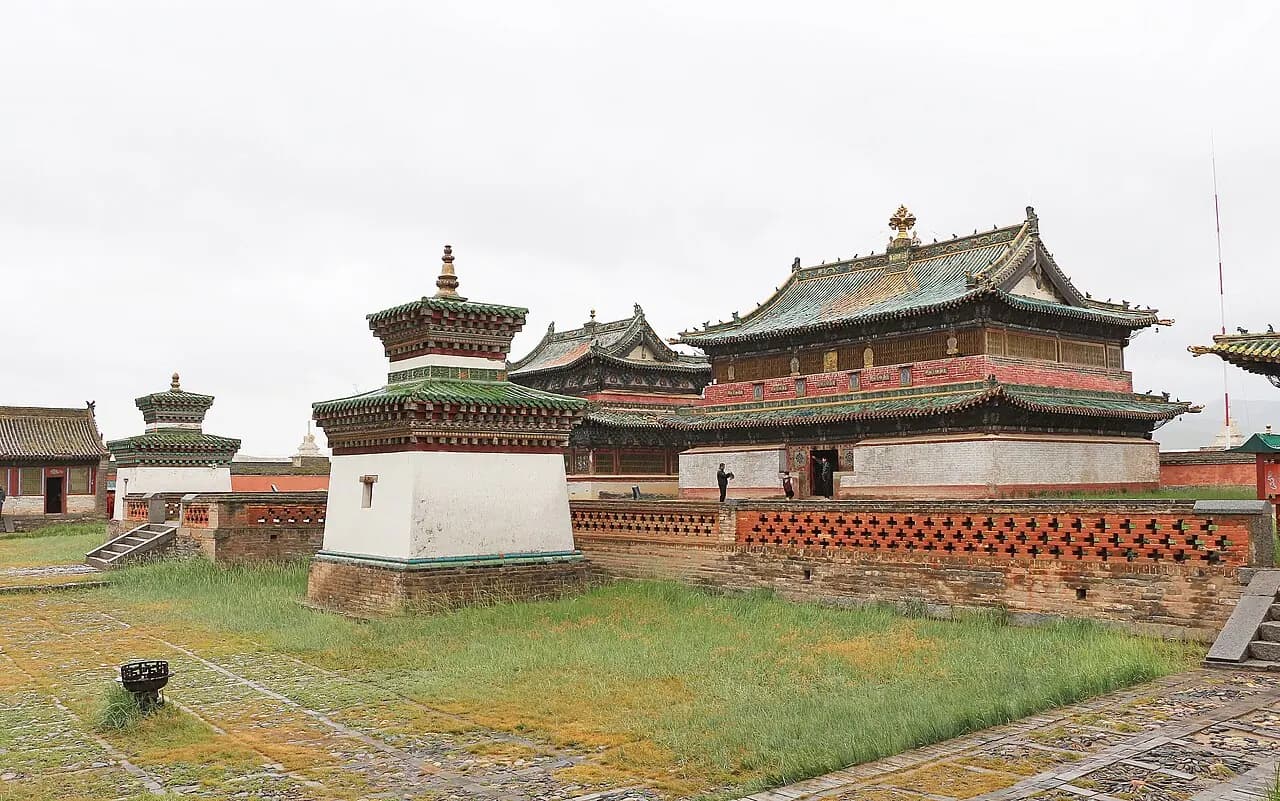
Kharkhorin & Erdene Zuu
Mongolia's oldest surviving Buddhist monastery, built on the ruins of the imperial capital Karakorum.
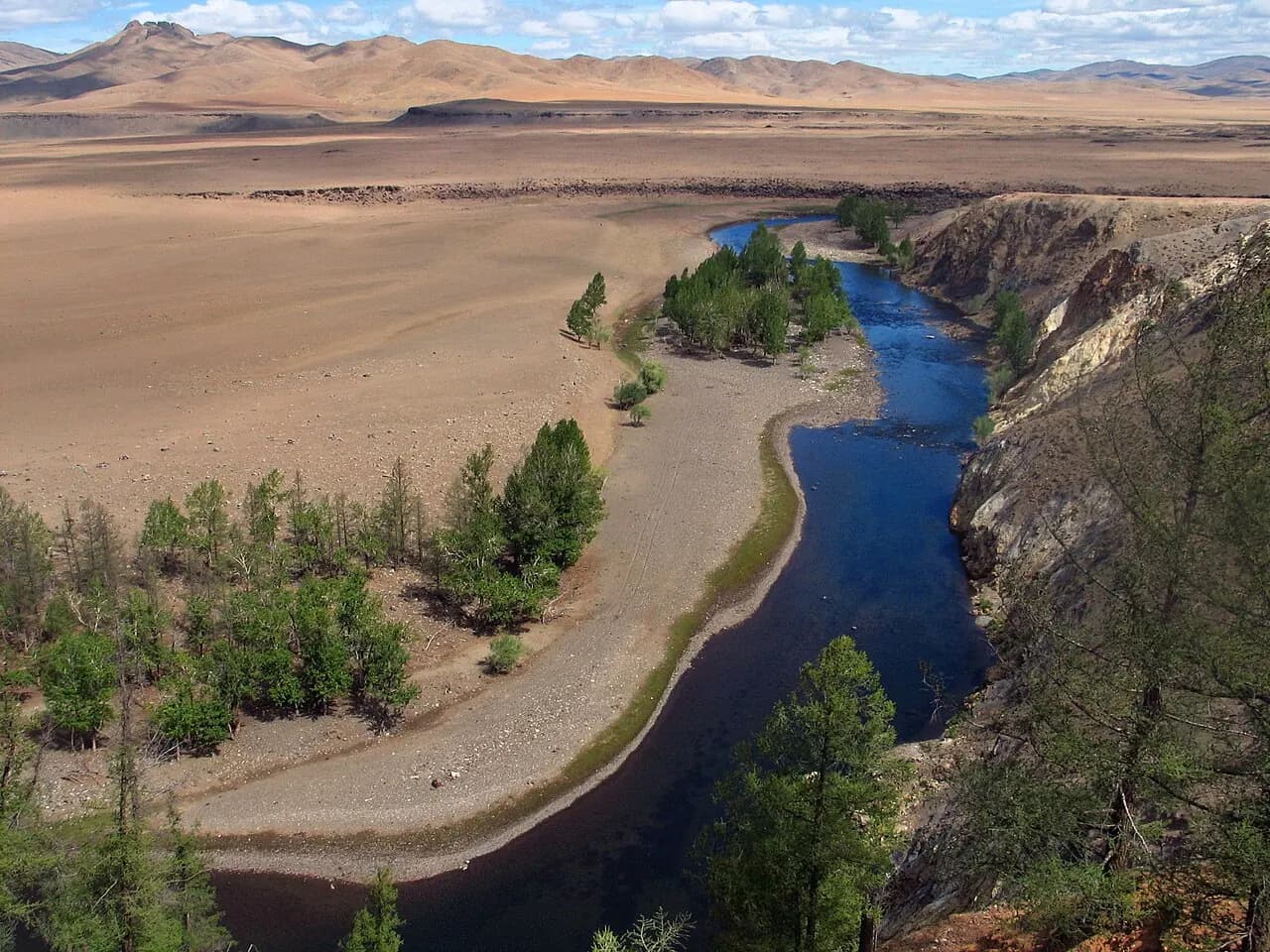
Orkhon Valley & Ulaan Tsutgalan
A 20 m waterfall, nomad summer camps and Tövkhön monastery.
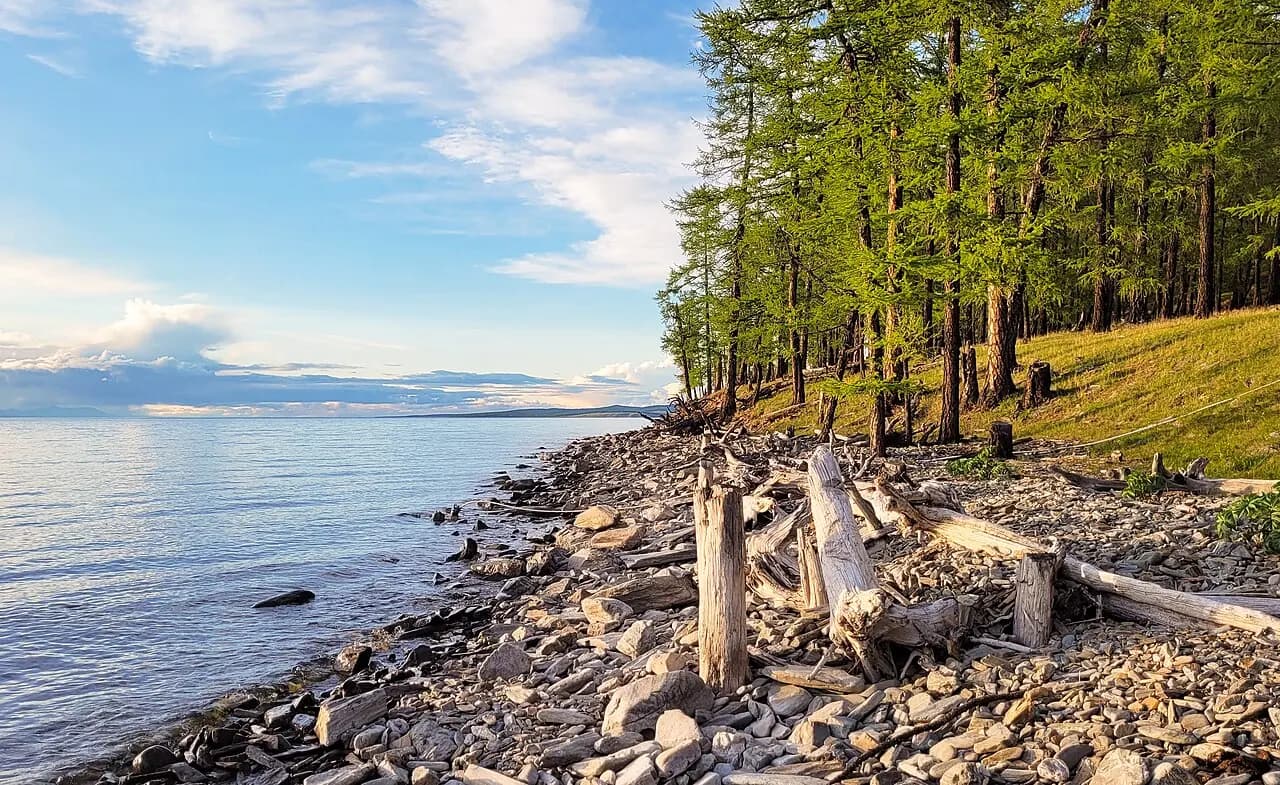
Lake Khövsgöl
The 'blue pearl of Mongolia', holding almost 70% of Mongolia's fresh water.
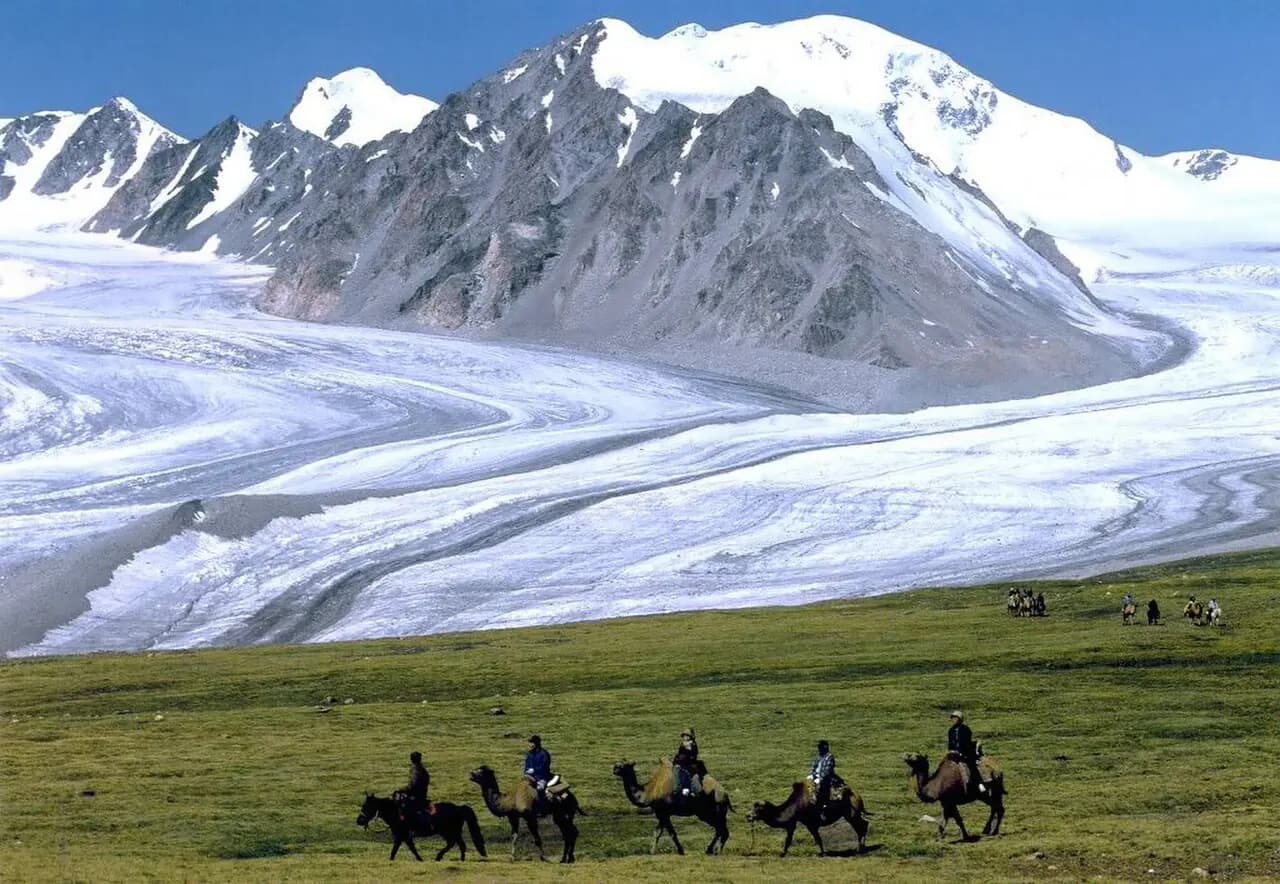
Altai Tavan Bogd
Mongolia's highest peak Khüiten (4,374 m) and the Potanin glacier.
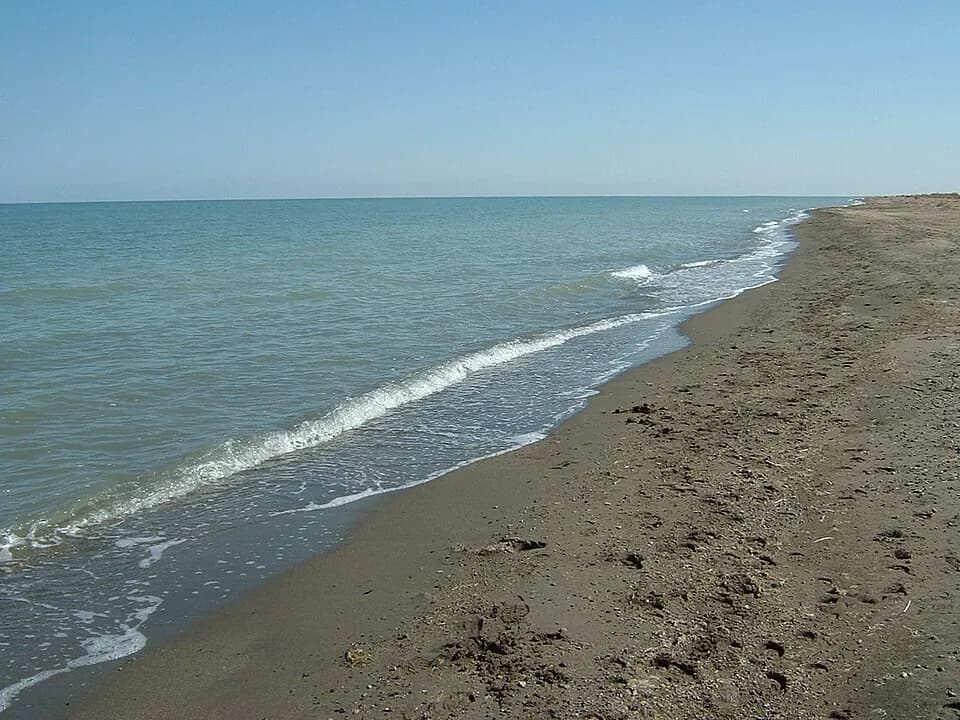
Uvs Lake
Mongolia's largest lake, a UNESCO biosphere reserve.
Frequently asked questions
What is the coldest month in Mongolia?
January is the coldest month, with Ulaanbaatar averaging around −20 °C and nights dropping below −30 °C during cold spells.
When does it rain most in Mongolia?
Most rain falls in July and August, usually as short afternoon showers. The north is the wettest region and the Gobi the driest.
Is it cold at night in Mongolia in summer?
Yes, nights can be cool or cold, especially in the mountains and the north, so bring a warm layer even in summer.