Mongol Empire
The Mongol Empire, history's largest contiguous land empire: its rise under Chinggis Khaan, expansion, governance, its division and where to see its traces.
3 min read · Updated
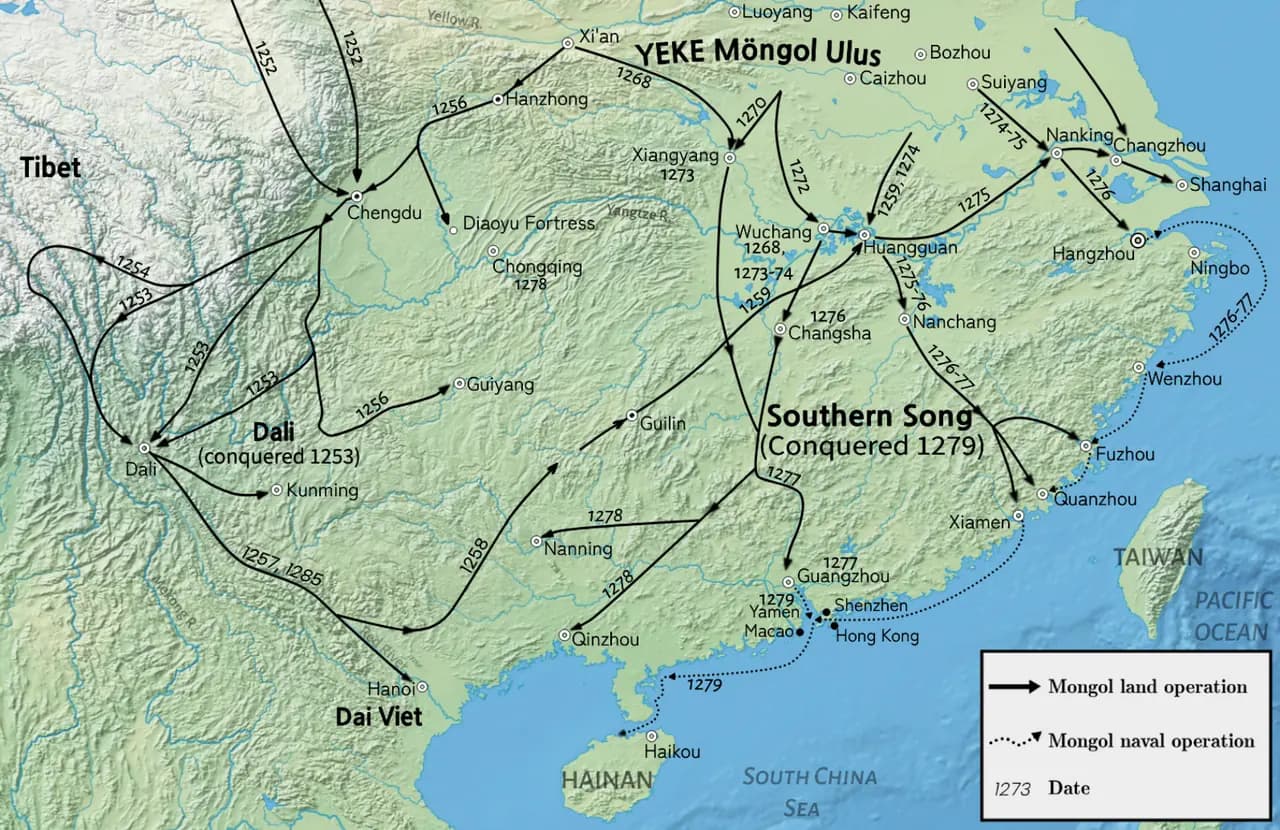
Photo: Akinneyfluorse · CC BY 4.0 · Wikimedia Commons
The Mongol Empire was the largest contiguous land empire in history. Founded by Chinggis Khaan in 1206, it reached its greatest extent in the late 13th century, covering roughly 23–24 million square kilometres from Korea and China to Eastern Europe and the Middle East. Its capital was Karakorum, in the Orkhon Valley of central Mongolia.
Rise under Chinggis Khaan
After uniting the steppe tribes, Chinggis Khaan reorganised Mongol society into decimal units of 10, 100, 1,000 and 10,000 (a tümen), rewarding loyalty and ability rather than birth. His mounted archers, each with several horses, moved with remarkable speed and discipline. Campaigns against the Western Xia, the Jin dynasty of northern China and the Khwarazmian Empire in Central Asia (1219–1221) made the Mongols the dominant power in Eurasia by the time of his death in 1227.
Expansion under his successors
- Ögedei Khan (r. 1229–1241) completed the conquest of the Jin, built Karakorum's palace and walls from 1235, and sent armies west into the lands of the Rus', Poland and Hungary.
- Güyük Khan (r. 1246–1248) ruled only briefly.
- Möngke Khan (r. 1251–1259) launched campaigns against the Song in southern China and sent his brother Hülegü to the Middle East, where Baghdad fell in 1258.
- Kublai Khan (r. 1260–1294) completed the conquest of China and founded the Yuan dynasty.
In 1260 a Mongol force was defeated by the Mamluks of Egypt at Ain Jalut, ending westward expansion in the Middle East.
How the empire was governed
The Mongols ran a huge and diverse realm through a few key institutions:
- The yam (örtöö) — a relay system of post stations with fresh horses that carried messages, officials and envoys across the empire.
- The paiza (gerege) — metal tablets that served as passports and proof of authority for travellers on official business.
- The Ikh Zasag (Great Yassa) — the body of laws and decrees attributed to Chinggis Khaan.
- Religious tolerance — Buddhists, Muslims, Christians, Daoists and shamans were generally free to practise, and clergy were often exempt from taxes.
Security along the trade routes, often called the Pax Mongolica, helped goods, ideas and travellers such as Marco Polo and William of Rubruck move between Europe and East Asia. The conquests were also extremely destructive: many cities that resisted were razed, and historians still debate the scale of the loss of life.
Division and legacy
After Möngke's death, a succession war between Kublai and his brother Ariq Böke split the empire into four largely independent realms: the Yuan dynasty in China and Mongolia, the Golden Horde on the western steppe and in the Rus' lands, the Chagatai Khanate in Central Asia, and the Ilkhanate in Persia. The Yuan fell in 1368, but Mongol rule continued on the steppe, and later dynasties across Asia claimed Chinggisid descent to strengthen their legitimacy for centuries.
Practical tips: where to see the empire's traces
- Kharkhorin — the site of Karakorum, with Erdene Zuu Monastery (built from 1585 partly with stone from Karakorum's ruins), the Kharakhorum Museum and a granite turtle that once marked the city's boundary.
- Ulaanbaatar — the Chinggis Khaan National Museum and the National Museum of Mongolia display weapons, paiza, coins and costumes from the period.
- Chinggis Khaan Statue Complex east of the capital has a small exhibition on the empire era.
- Opening hours vary with the season, so confirm with each site before travelling.
Places in this guide
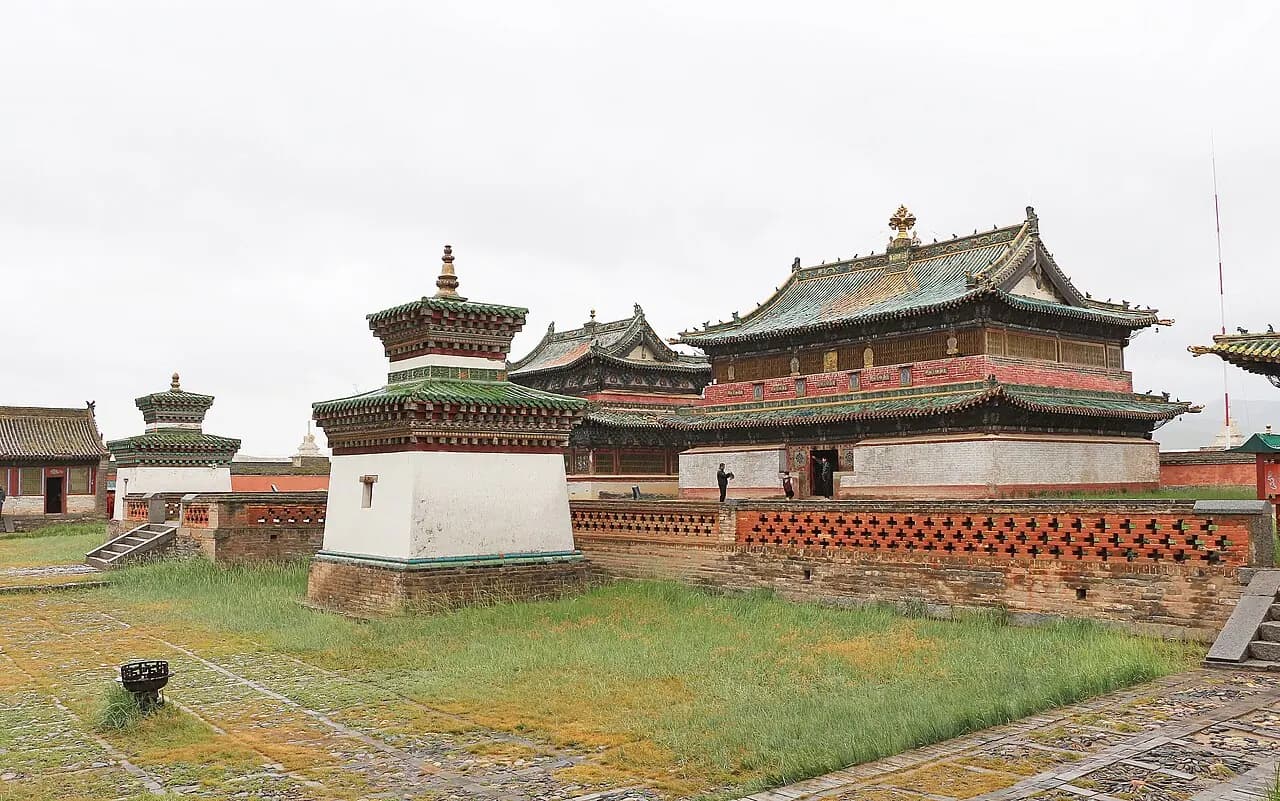
Kharkhorin & Erdene Zuu
Mongolia's oldest surviving Buddhist monastery, built on the ruins of the imperial capital Karakorum.
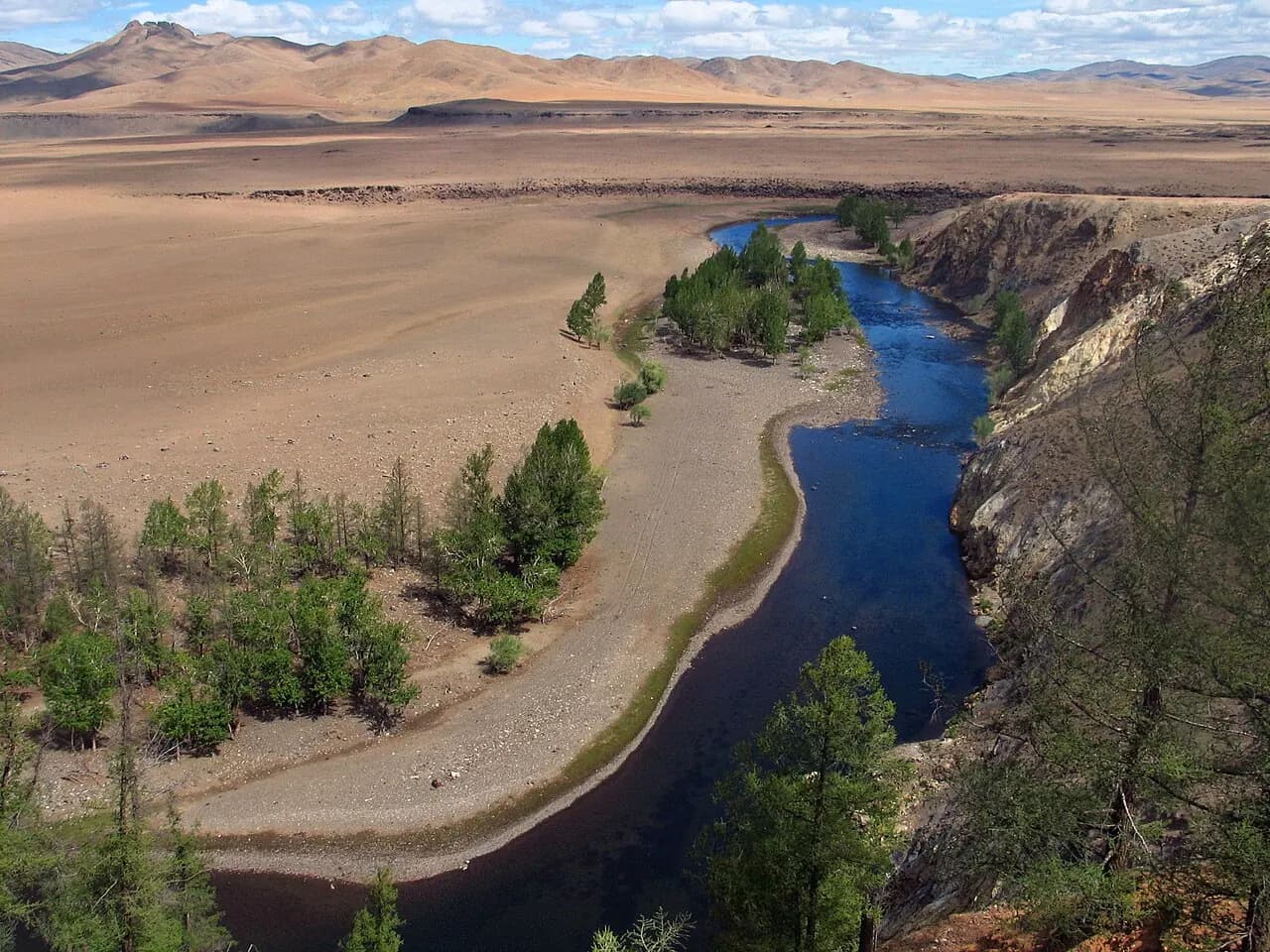
Orkhon Valley & Ulaan Tsutgalan
A 20 m waterfall, nomad summer camps and Tövkhön monastery.
Frequently asked questions
How big was the Mongol Empire?
At its height in the late 13th century it covered roughly 23–24 million km², making it the largest contiguous land empire in history.
What was the capital of the Mongol Empire?
The capital was Karakorum in the Orkhon Valley; its ruins lie beside Erdene Zuu Monastery at today's Kharkhorin.
Why did the Mongol Empire split?
After Möngke Khan died in 1259, a succession war between Kublai and Ariq Böke split the empire into four largely independent realms.