Aaruul: Dried Curds
Aaruul, Mongolian dried curds: how herders make and sun-dry this hard, tangy dairy snack, its types, how to eat it, and tips on buying and carrying it home.
3 min read · Updated
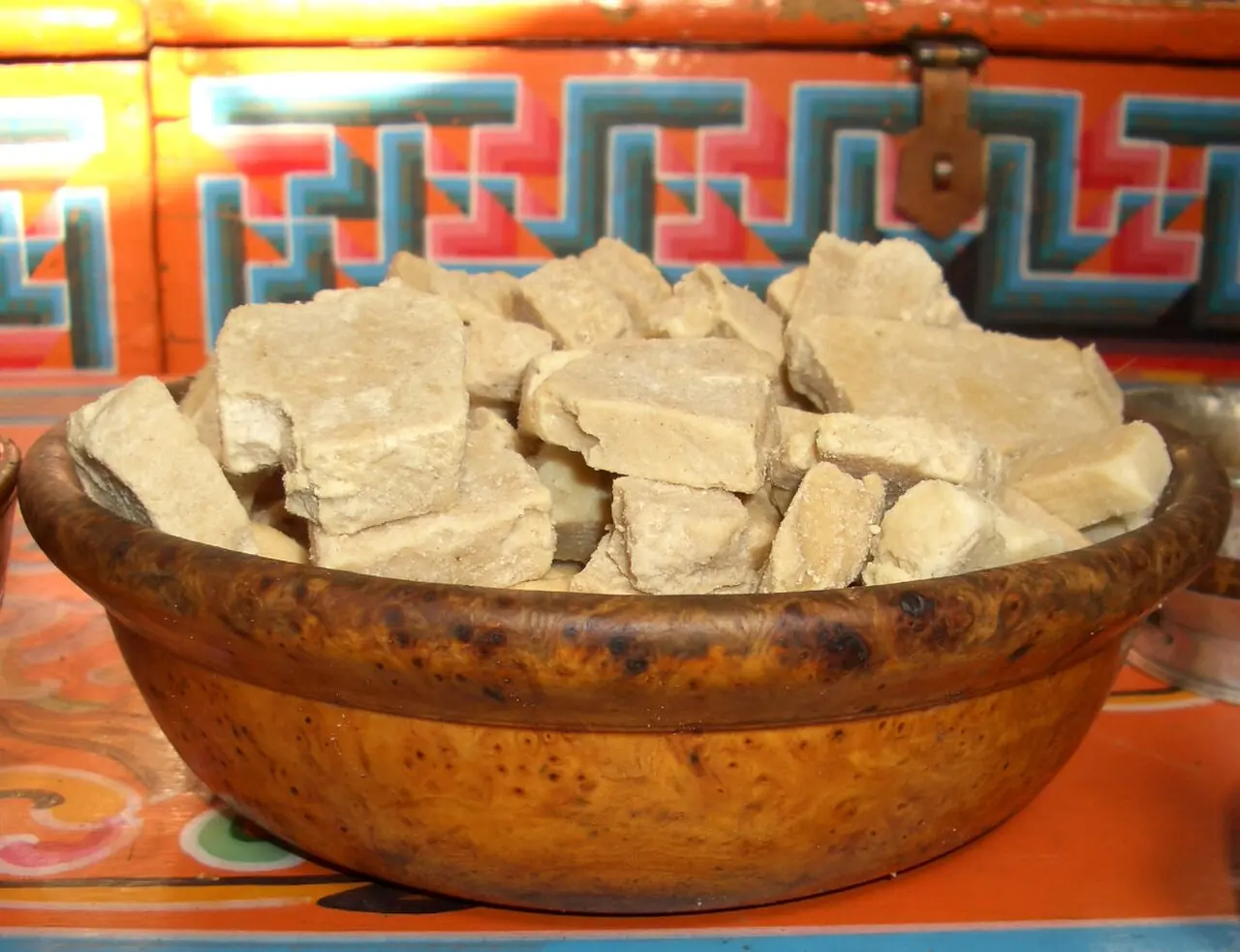
Photo: Mizu_Basyo · GFDL · Wikimedia Commons
Aaruul is Mongolian dried curd: pieces of fermented milk curd that are pressed, cut into shapes and dried in the sun and wind, often on the roof of a ger. Hard, tangy and sometimes slightly sweet, it keeps for months without refrigeration, which made it an ideal food for nomads. It is also the Mongolian snack you are most likely to be offered as a visitor.
How aaruul is made
Aaruul is made in summer and early autumn, when milk is plentiful. Cow's milk is most common, but yak, goat, sheep and camel milk are used too.
- Milk is fermented into tarag (yogurt), or the curd left over from distilling milk vodka is used.
- The curd is boiled and stirred until thick, then poured into a cloth bag and pressed under a weight to squeeze out the whey.
- The firm block is cut into strips, slabs or small pieces, pressed into moulds with decorative patterns, or squeezed into shape by hand.
- The pieces are laid out on wooden boards, cloth or the flat top of the ger to dry in the sun and wind for days, until they are hard all the way through.
The leftover whey is not wasted; it is often fed to animals or used in other dairy work.
Types and flavours
Traditional aaruul is sour and very hard. Many versions sold in Ulaanbaatar are sweetened with sugar, and some are softer and chewier. Shapes range from plain rectangles to flower-patterned discs, twisted strips and small balls, and colour runs from creamy white to pale yellow. Aaruul is sometimes confused with related dairy foods:
- Byaslag is a soft, pressed cheese eaten fresh rather than dried.
- Eezgii is curd cooked slowly until it turns golden brown and crumbly, with a sweet, caramel-like taste.
- Öröm is a rich clotted cream skimmed from boiled milk.
Aaruul in Mongolian life
A plate of aaruul and other white foods is set out for guests alongside milk tea. At Tsagaan Sar, aaruul is placed on the tall stack of ul boov biscuits that forms the centrepiece of the table. Children chew it as a snack, herders carry it on long journeys, and families in the countryside send bags of homemade aaruul to relatives in the city. It is a concentrated source of protein and calcium.
How to eat aaruul
Do not try to bite a hard piece in one go. Mongolians suck on it slowly, break off small pieces, or soften it in hot milk tea. A single piece can last a long time, which is part of its appeal on a bumpy drive across the steppe.
Practical tips for travellers
- Take care with dental work: hard aaruul can be tough on fillings and crowns.
- You can buy aaruul at food markets and supermarkets in Ulaanbaatar and from roadside sellers in the countryside; homemade versions from herder families are often the most flavourful.
- Keep it dry in a paper or cloth bag; it can go mouldy if stored damp in plastic.
- Many countries, including those of the European Union, restrict bringing dairy products in personal luggage. Check your home country's customs rules before packing aaruul as a souvenir.
- If your stomach is new to Mongolian dairy, start with a small piece.
Frequently asked questions
What does aaruul taste like?
Traditional aaruul is sour, milky and very hard; many shop versions are sweetened and softer.
How long does aaruul keep?
Fully dried aaruul keeps for months without refrigeration if it is stored dry.
Can I take aaruul home as a souvenir?
It depends on your destination: many countries, including the EU, restrict dairy products in personal luggage, so check your home country's customs rules first.