Traditional Handcraft
Mongolian traditional handcraft explained: felt making, ger building, saddles, embroidery and leatherwork, plus tips on buying authentic crafts as a traveller.
3 min read · Updated
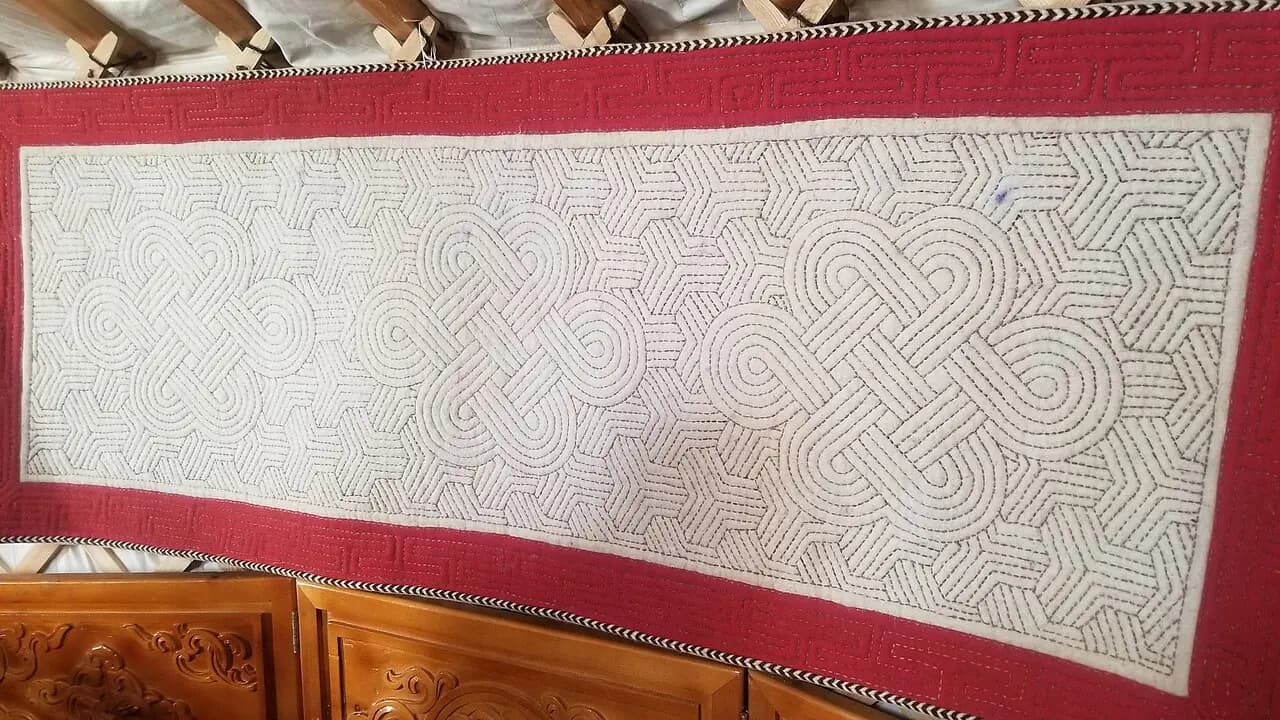
Photo: MN5 · CC0 · Wikimedia Commons
Mongolia's traditional handcrafts grew out of nomadic life: herders needed homes, clothing, saddles and vessels that were light, durable and made from what their animals and the steppe provided. Felt, wood, leather, wool and silver remain the core materials, and many families still make or repair these items themselves. Travellers see the crafts in daily use in the countryside and on sale in Ulaanbaatar's craft shops.
Felt making: the foundation of the ger
Felt (esgii) insulates the ger, lines boots and becomes rugs, saddle blankets and slippers. Traditional felt making takes place in late summer or early autumn, after the sheep have been sheared. Families beat the wool with sticks to loosen it, spread it in even layers over an old "mother felt", sprinkle it with water and roll the whole bundle tightly around a pole inside a hide. The roll is then dragged behind a horse or camel across the grassland for hours, and the friction and moisture bind the fibres into a new sheet. It is a communal event, usually followed by a shared meal and blessings for the new felt.
Ger making: portable architecture
A ger is built from a handful of wooden parts: the expandable lattice walls (khana), the roof poles (uni), the crown ring (toono), two central columns (bagana) and a painted door. Craftsmen traditionally work with willow, birch or larch, bending the wood with heat and tying many joints with rawhide rather than nails. Doors, columns and the crown are often painted in orange, red and blue with geometric patterns. The traditional craftsmanship of the Mongol ger and its associated customs was inscribed on UNESCO's Representative List of the Intangible Cultural Heritage of Humanity in 2013. A few experienced people can put up a family ger in roughly one to two hours.
Saddles and horse gear
The Mongolian saddle has a wooden frame with a high front and back, and festive saddles are decorated with silver or brass plates. Saddle makers also produce bridles, stirrups, hobbles and leather straps. At Naadam and on special family occasions, riders bring out their finest tack, and a well-made saddle may be handed down through generations. Tourist horses are usually fitted with more forgiving Russian-style saddles, because the traditional design is uncomfortable for beginners.
Embroidery, appliqué and textiles
Embroidery (khatgamal) decorates deels, hats, boots, pillows and pouches, using motifs such as the endless knot and cloud scrolls. Mongolian Buddhist art also has a distinctive appliqué tradition (zeegt naamal), in which pieces of silk are stitched together into large religious images; some monasteries display giant appliqué thangkas during festivals. Today, women's cooperatives around the country produce felt toys, embroidered bags and knitted wool and cashmere goods.
Leatherwork
Leather and rawhide were essential before plastic and metal containers became common. Craftspeople make the khukhuur, the large leather bag in which airag is fermented, as well as whips, flasks, harness and traditional boots (gutal) with upturned toes. Rawhide is still used to tie parts of the ger frame together.
Practical tips for buying handcrafts
- Felt slippers, small felt animals, embroidered pouches and leather goods are light, easy-to-pack souvenirs.
- In Ulaanbaatar, look in craft and souvenir shops in the city centre and at the large Narantuul market; ask whether items are made in Mongolia, since some are imported.
- In the countryside, buy directly from herder families or cooperatives when offered, and ask before photographing people at work.
- Antiques and items of cultural value may need export documents. Check the current rules with the Customs General Administration of Mongolia before buying old saddles, religious objects or anything that looks antique.
- Shop locations and prices change, so confirm before you go.
Frequently asked questions
How is Mongolian felt traditionally made?
Sheep's wool is beaten loose, layered over an old felt, wetted and rolled inside a hide, then dragged behind a horse or camel for hours until the fibres bind together.
Is ger making recognised by UNESCO?
Yes. The traditional craftsmanship of the Mongol ger and its associated customs was inscribed on UNESCO's Representative List of Intangible Cultural Heritage in 2013.
Can I take old saddles or antiques out of Mongolia?
Antiques and culturally valuable items may require export permission. Check the current rules with Mongolian customs before you buy.