Traditional Mongolian Cuisine
Traditional Mongolian cuisine explained: red food and white food, buuz, khuushuur, tsuivan, boodog and salty milk tea, plus tips for eating in Mongolia.
3 min read · Updated
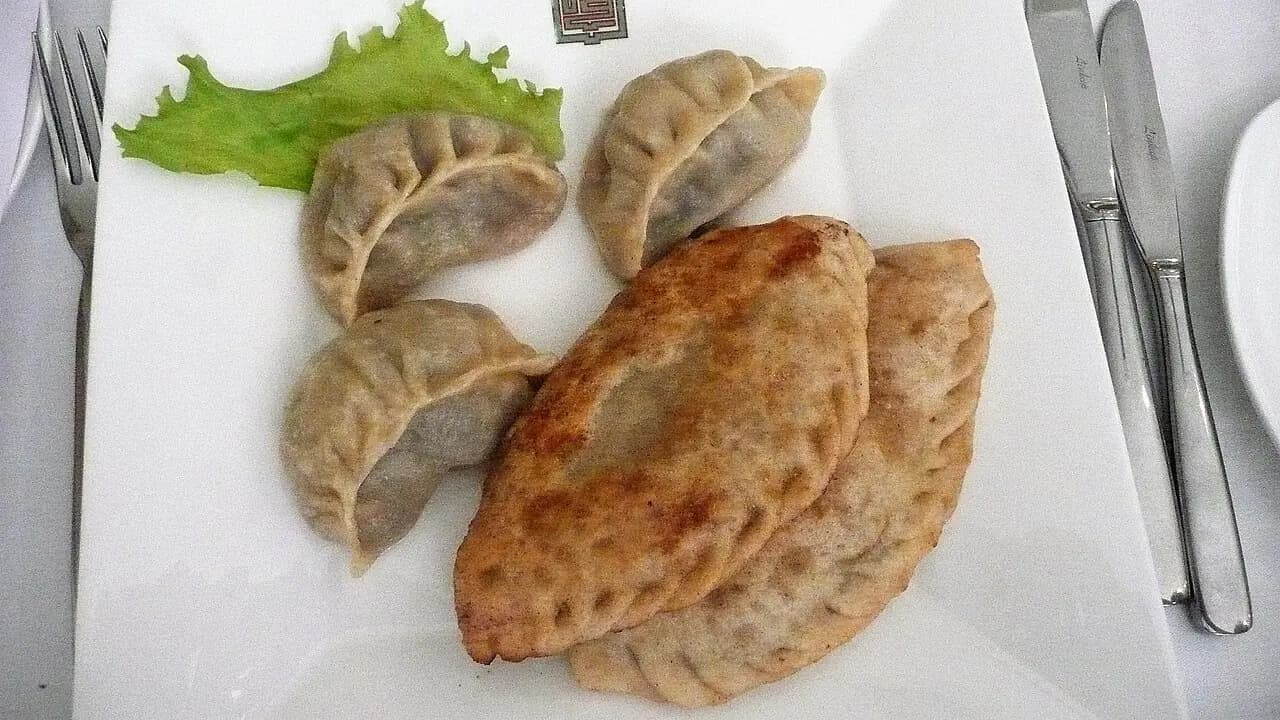
Photo: Brücke-Osteuropa · Public domain · Wikimedia Commons
Traditional Mongolian cuisine is built on two pillars: red food (ulaan idee), meaning meat, and white food (tsagaan idee), meaning dairy products. Shaped by herding life and a harsh continental climate, dishes are hearty and rich in fat and protein, with few spices and vegetables. Signature dishes include buuz, khuushuur, tsuivan and boodog, all washed down with salty milk tea.
Red food and white food
Red food comes from the herds: mutton above all, plus beef, goat, horse and camel, and yak in the mountains. Meat dominates the cold months, when families slaughter animals in late autumn for winter stores and air-dry strips of meat into borts, which keeps for months. White food belongs to summer, when animals give milk. Milk from cows, yaks, sheep, goats, camels and mares becomes clotted cream (öröm), yogurt (tarag), soft cheese (byaslag), dried curds (aaruul), the sweet baked curd eezgii, butter and fermented mare's milk (airag). White food stands for purity, and it is offered first to guests and placed at the top of the Tsagaan Sar table.
Dumplings and pastries: buuz, khuushuur and bansh
- Buuz are steamed dumplings filled with minced mutton or beef, onion and garlic, pinched closed with a small opening at the top. Families make hundreds, sometimes thousands, before Tsagaan Sar.
- Khuushuur are flat, deep-fried pastries filled with minced meat. They are the classic Naadam food, sold hot at stalls around the festival grounds.
- Bansh are small boiled dumplings, often cooked in milk tea (banshtai tsai) or in soup.
Noodles, soups and festive dishes
Tsuivan is the great everyday dish: hand-cut noodles steamed and stir-fried with strips of meat and some vegetables such as carrot, cabbage or onion. Guriltai shöl, noodle soup with mutton, is a common home and canteen meal. For celebrations, boodog (goat cooked from the inside with hot stones in its own skin) and khorkhog (mutton cooked with hot stones in a sealed container) are prepared outdoors. A whole roasted sheep's back and tail, the uuts, is the centrepiece of the Tsagaan Sar table.
Milk tea and everyday drinks
Suutei tsai, Mongolian milk tea, is made by boiling brick or green tea with water and milk and adding salt. Some families add butter, roasted millet or rice. A bowl is offered to every visitor, and refusing it outright is considered impolite; a sip is enough. In summer, airag is the drink of the countryside, and milk vodka (shimiin arkhi) is distilled at home.
Practical tips for eating in Mongolia
- Roadside canteens called guanz serve cheap, filling meals such as tsuivan, buuz and soup; menus are short and often in Mongolian only.
- Ulaanbaatar has a wide range of restaurants, including vegetarian and vegan ones. In the countryside, vegetarian options are limited, so tell your tour operator in advance.
- Accept bowls and plates with your right hand, or with both hands, and taste at least a little of what you are offered.
- The diet is rich in fat; if your stomach is sensitive, go slowly with new dishes and with fresh dairy.
- Restaurant menus and prices change, so check current details before visiting a specific place.
Frequently asked questions
What are red food and white food in Mongolia?
Red food (ulaan idee) means meat, eaten mostly in the cold months, and white food (tsagaan idee) means dairy products, made mainly in summer.
What is the national dish of Mongolia?
There is no single official dish, but buuz, khuushuur, tsuivan and khorkhog are the most iconic, and buuz is central to Tsagaan Sar.
Is it easy to find vegetarian food in Mongolia?
In Ulaanbaatar, yes, as there are vegetarian restaurants. In the countryside options are limited, so tell your tour operator about dietary needs in advance.