Photo: LittleT889 · CC BY 4.0 · Wikimedia Commons
Everyday food
Banshtai tsai
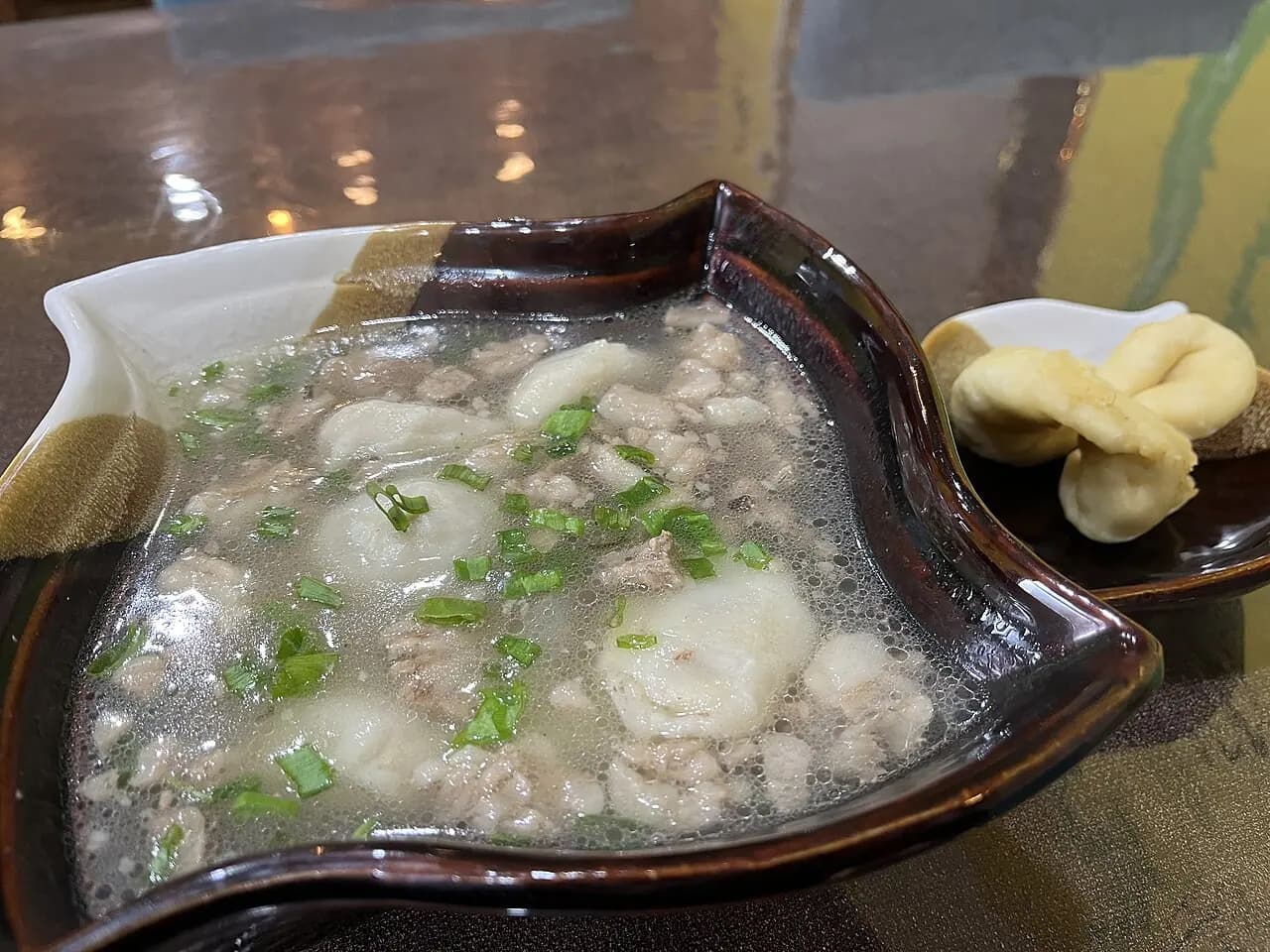
Small dumplings cooked in salty milk tea, a warming winter dish.
What it is
Banshtai tsai means, roughly, "tea with bansh". Bansh are small meat dumplings, smaller than the steamed buuz and usually boiled rather than steamed, and in this dish they are cooked directly in Mongolian salted milk tea. The result is something between a drink and a soup: a bowl of milky, lightly salty tea with a few tender dumplings and, in many households, small pieces of meat. It is one of the clearest examples of how Mongolian cooking blends tea, dairy and meat into a single warming meal.
The dumplings are filled with minced mutton or lamb, onion and salt, and some families use beef. The tea itself is suutei tsai, made from brick tea, water, milk and salt.
How it is made
Recipes vary by family. A rich version begins by melting öröm (clotted cream) or butter in the pot and toasting a little flour in it, then adding brewed tea and meat on the bone. The dumplings go in, milk is added near the end, and the pot is brought back to the boil. Cooks keep the tea at a gentle simmer once the dumplings are in, because a hard rolling boil can split them. Simpler versions just add bansh to ordinary milk tea and simmer them for about ten minutes.
Bansh can be made in quantity and frozen, which suits winter cooking in the countryside, where the cold outside does the work of a freezer.
When and where to try it
Banshtai tsai is mainly a cold-season dish. Some Mongolians call it "tea with seven dumplings", from the custom of serving seven bansh in each bowl, and it has a reputation as a restorative drink for someone who feels tired or slightly unwell. You are most likely to be served it in a family home or a countryside guesthouse in autumn or winter. Some Mongolian restaurants and canteens in Ulaanbaatar also list it, often near the soups.
Etiquette and tips
- It is served in a bowl. Drink the tea and eat the dumplings from the same bowl; a spoon is usually provided in restaurants.
- Accept the bowl with your right hand, or with both hands, as you would ordinary milk tea.
- The tea is salted, not sweet. If the taste is new to you, start slowly; it is perfectly polite to drink only part of it.
- Banshtai tsai is filling enough to be a light meal on its own, so you may not need to order much else.
- Plain bansh are also served boiled in soup or on their own, so ask for banshtai tsai by name if you want the tea version.
- Ingredients
- Milk tea, small dumplings, meat
- How it is made
- Boil the tea, add dumplings, simmer 10 minutes.
- Health & season
- A winter dish. · Winter, Autumn
- Famous in
- Central, Khangai & Central
Photo: LittleT889 · CC BY 4.0 · Wikimedia Commons
Where to eat real Mongolian food in Ulaanbaatar