Naadam Festival
Naadam Festival is held every 11–13 July: wrestling, horse racing and archery, the Ulaanbaatar opening ceremony, local naadams and practical tips for visitors.
3 min read · Updated
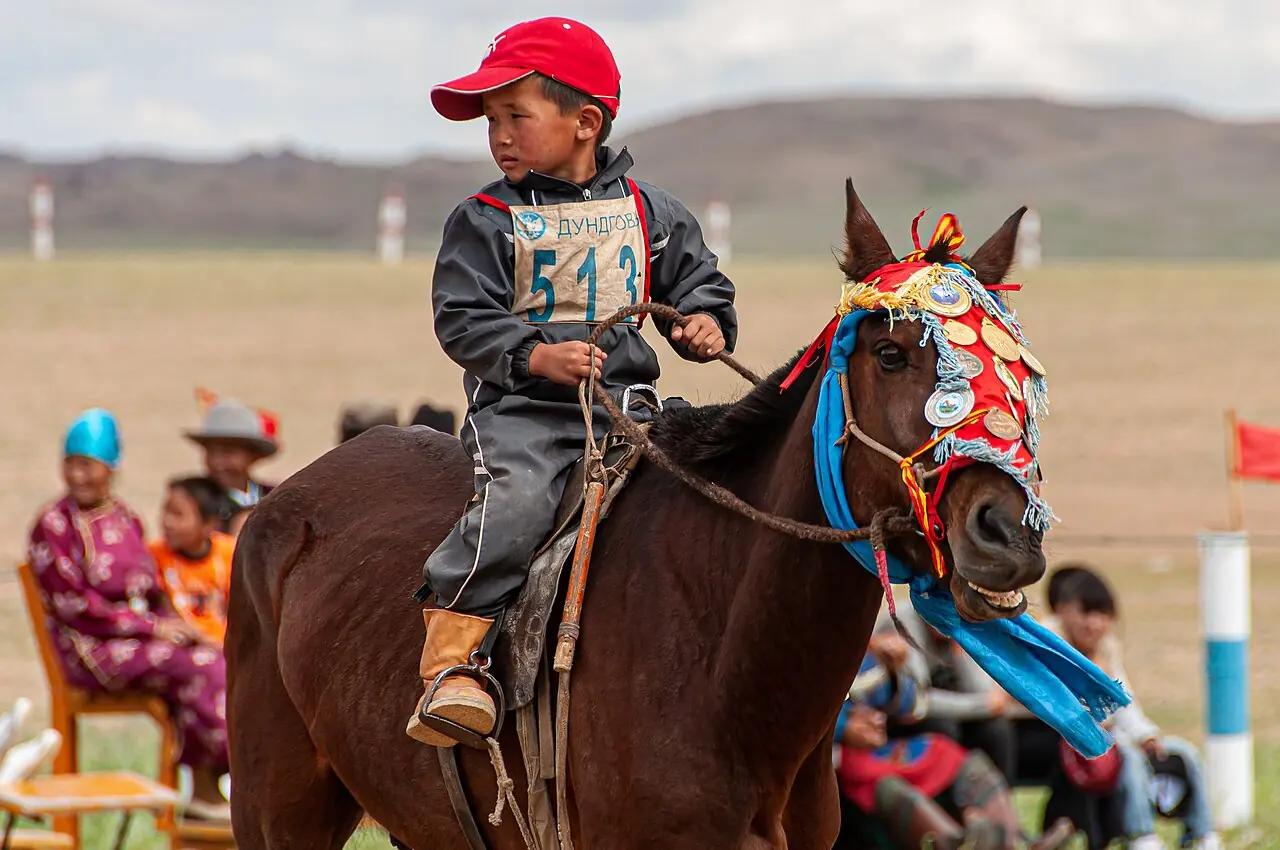
Photo: FischerFotos · CC BY-SA 4.0 · Wikimedia Commons
Naadam is Mongolia's biggest national festival, held every year on 11–13 July, with public holidays now running from 10 to 15 July. It centres on the "three manly games" — wrestling, horse racing and archery — and was inscribed on UNESCO's Representative List of the Intangible Cultural Heritage of Humanity in 2010. The main event is in Ulaanbaatar, but almost every province and district holds its own naadam during the summer.
What the Naadam Festival celebrates
Naadam (the word means "games") has roots in the gatherings of steppe nomads long before the Mongol Empire, when contests of strength, riding and shooting tested warriors and entertained whole communities. The modern national festival marks the 1921 revolution and Mongolian statehood, and today it is a celebration of identity as much as sport. Families dress in their best deel, eat khuushuur (fried meat pastries), drink airag (fermented mare's milk) and visit relatives, and the capital fills with people from the countryside.
The three manly games
- Wrestling (bökh): Hundreds of wrestlers — traditionally 512 or 1,024 at the national festival — compete in a knockout tournament with no weight classes. A wrestler loses when any part of his body other than the soles of his feet and his palms touches the ground. Wrestlers wear the open-chested zodog jacket, tight shuudag briefs and gutal boots, and perform a slow eagle dance before and after each bout. Titles such as Nachin (falcon) and Zaan (elephant) are earned by reaching the later rounds, while Arslan (lion) goes to the champion and Avarga (titan) to a wrestler who wins the national title a second time.
- Horse racing (morin uraldaan): Races are run cross-country over roughly 10 to 30 km, with separate classes by the horses' age, from two-year-olds to mature stallions. The jockeys are children, and rules on minimum age and protective gear have been tightened in recent years. The winning horse is praised as "tümnii ekh" (leader of ten thousand), and the last horse in the two-year-old race is honoured with a light-hearted song.
- Archery (sur kharvaa): Men and women shoot with traditional composite bows at rows of small leather targets on the ground; men usually shoot from about 75 m and women from a shorter distance. Judges signal hits with a long, melodic call of "uukhai".
Ankle-bone shooting (shagai kharvaa), in which players flick small bone tiles along a board at a target, has become a popular fourth contest.
Naadam in Ulaanbaatar
The festival opens on 11 July with a ceremony at the National Sports Stadium: a parade, music, dance and the arrival of the Nine White Banners carried in by mounted guards. Wrestling and archery take place in and around the stadium, while the horse races are held on the open steppe at Khui Doloon Khudag, west of the city. Expect large crowds, heavy traffic and higher prices for accommodation and tours over the holiday.
Local naadams in the countryside
Province (aimag) and district (soum) naadams are smaller, more relaxed and, for many travellers, more rewarding. They are usually held in July or August, sometimes a few days before or after the national dates, and you can stand close to the wrestlers and watch the horses come in across the steppe. Dates are set locally each year, so ask your tour operator or guide and keep your route flexible.
Practical tips for Naadam
- Book accommodation, domestic flights and tours well ahead; July is peak season.
- Opening-ceremony tickets are limited and sell quickly. Sales channels and prices change from year to year, so confirm with official sellers or your tour operator close to the date.
- Bring a hat, sunscreen, water and a rain layer; July days can be hot, with sudden afternoon storms.
- At the horse races, stay behind barriers — horses finish at full gallop and crowds surge towards them.
- Ask before photographing people up close, and never walk onto the wrestling ground during bouts.
Frequently asked questions
When is the Naadam Festival held?
The national Naadam is held every year on 11–13 July, with public holidays now covering 10–15 July. Provincial and district naadams take place on varying dates in July and August.
What are the three manly games?
They are wrestling, horse racing and archery. Women compete in archery and girls ride in the horse races, while wrestling is for men only.
How do I get tickets for the Naadam opening ceremony?
Tickets are sold through official outlets and tour operators. Sales channels and prices change each year, so check early and confirm close to the date.